
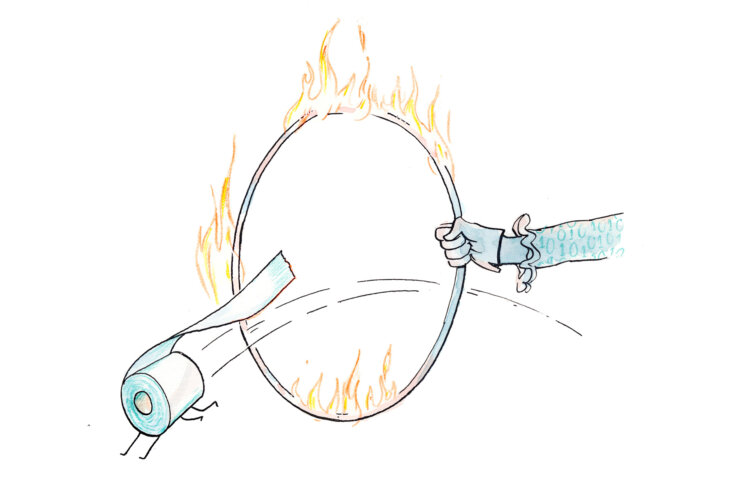
Enshittification, a word coined by author and journalist Cory Doctorow, describes the process by which thriving online platforms decay as they prioritize profits over user experience. An innovative search engine finds success because of the accuracy of its results—and then, having created a dependency, forces us to wade through sponsored links that have little to do with the information we’re looking for. A social network draws in millions all around the world to create a sense of community—only to fill pages with ads and promoted content, eroding the practices that made the site popular in the first place.
Enshittification not only undermines how online services are used but also how reporting is disseminated. This happens in a number of ways. As big tech distances itself from news content, stories don’t travel as far as they once did on social media, or at all—indeed, referral traffic from large social platforms has nose-dived this past year. These same platforms implement features that incentivize extreme reactions, making the environment hostile to nuanced storytelling. We have covered some of the damage caused by enshittifiers. In a recent piece, Tajja Isen tells the story of one journalist with a large following who, after Elon Musk’s takeover of what was formerly Twitter, is now “struggling to reach more than a few dozen people at a time.” In our interview with Taylor Owen, the media scholar spoke about the scarcity of reliable information on sites like X about the war in Gaza. “These tools clearly are no longer good at one of the core capacities we’ve attributed to them in the past,” he explains—that is, “helping us better understand what’s going on in the world as events are unfolding.”