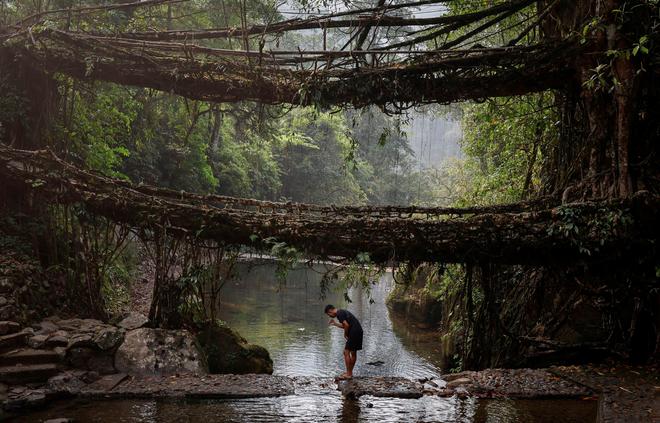
The curious case of the breathing bridges
I still remember trying to catch the monsoons in the wettest place on Earth, Mawsynram in Meghalaya. That was a couple of years before the pandemic when climate change hadn’t overturned our seasons. But it was not just the monsoons that we were there for, but a century-old manmade natural wonder- the root bridges of Meghalaya. The north-east State is known for its dramatic and lush landscapes, heavy rainfalls, and breathtakingly beautiful waterfalls. But it is the root bridges that set the state apart. Walking across a living, breathing bridge made up of tangled roots, as you get hemmed in by forested hills, can make you feel as if you have stepped into a fairyland. There are many such living breathing bridges in the rural villages of Meghalaya. These are built using the aerial roots of Ficus elastica, a species of fig tree. These bridges help one navigate across the water bodies in the deeper reaches of the forests of the north-east State.