Whose pandemic strategy really saved lives? Which states or countries lost the most people to the virus? Or to the unintended consequences of mitigation efforts? Now there’s finally some clear, objective data emerging from the fog.
The most telling statistic turns out to be the simplest: all-cause mortality. Tallies of who died, when and where can be used to calculate “excess mortality” — how many more people died in a given place and time period than would be expected. By contrast, official COVID-19 death statistics are clouded by differences in testing and a level of subjectivity doctors say is required to give a cause of death for people who had multiple health problems.
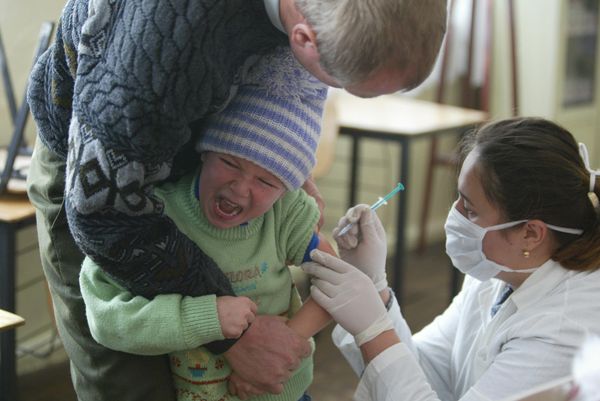
As early as the fall of 2020, statisticians were looking at all-cause mortality to try to figure out whether official COVID-19 deaths were overcounted or undercounted. But today, the death data are more complete, and cover enough time to make revealing comparisons between different periods and regions. While researchers are still figuring out which factors swayed these death statistics, a few conclusions are becoming clear: First, that COVID-19 has been a global tragedy, causing millions of deaths. Second, that vaccines have saved countless lives. And third, that during the omicron and delta waves, the value of any non-pharmaceutical mitigation measures — masking, distancing, closing businesses and schools — was probably not nothing, but vaccination rates mattered far, far more.