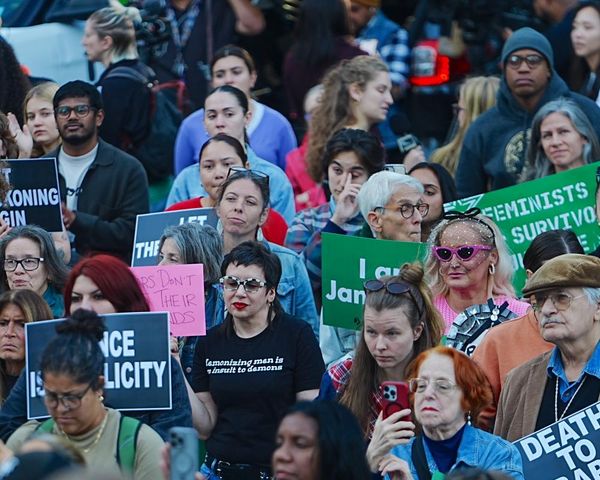
Less than an hour into the “thirst strike” held last week on the steps of the U.S. Capitol, one of the activists calling for enhanced protections for construction workers passed out. An ambulance came to treat her.
“A young, seemingly healthy woman fainted so soon, and yet construction workers, not just in Texas, but throughout the country, are expected to labor in this climate for eight, 12, or 16-hour days,” said Eva Marroquin, a 50-year old construction worker and business owner who participated in the strike. Her replies have been translated from Spanish. “It’s evident that extreme heat doesn’t just impact workers, but is damaging society as a whole.”
Marroquin and dozens of others—workers, activists, labor leaders, and politicians—were demanding protections for workers during what is expected to be one of the hottest summers on record in Texas. Headlined by Texas Congressman Greg Casar, the vigil and thirst strike aimed to put pressure on President Joe Biden to fast-track federal heat protection standards under the Occupational Safety and Health Administration (OSHA). The agency has been drafting heat safety standards since 2021, but the process is slow going. As of now, OSHA does not require water breaks for workers, nor does Texas state law. Since 2010 and 2015, respectively, Austin and Dallas have required 10-minute rest breaks for construction workers every four hours. But these local rules will soon be moot when House Bill 2127, which bans local ordinances mandating rest breaks as part of its larger aim to reduce local governmental power, goes into effect September 1.