Experience demonstrates that there are a lot of reasons to support school choice, from escaping curricula wars to seeking academic excellence to adopting preferred teaching methods and schedules. But the last couple of years also demonstrated that relatively small institutions dependent on attracting families that can enroll or disenroll at will are more nimble than traditional public schools in responding to crises.
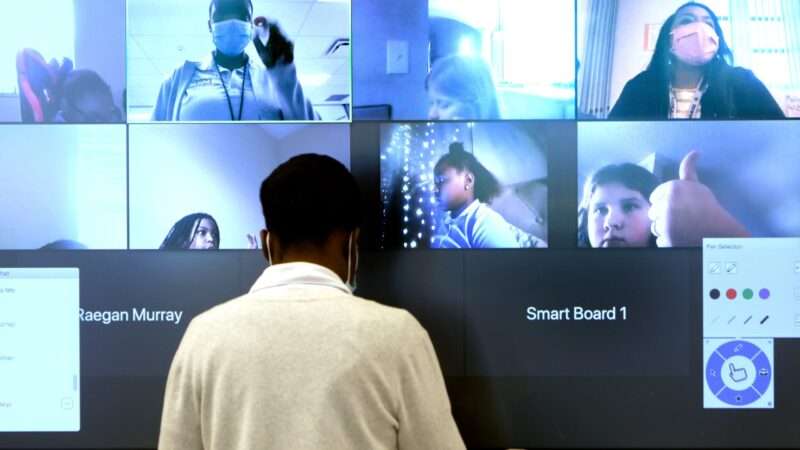
Starting at the beginning of the COVID-19 pandemic, Stanford University's Center for Research on Education Outcomes (CREDO) examined how charter schools responded to the public health threat in comparison to traditional public schools. Looking at schools in California, New York, and Washington for the period from March to June 2020 and then for the 2020-21 school year, researchers found that charters were able to pivot from in-school teaching to remote instruction remarkably quickly.