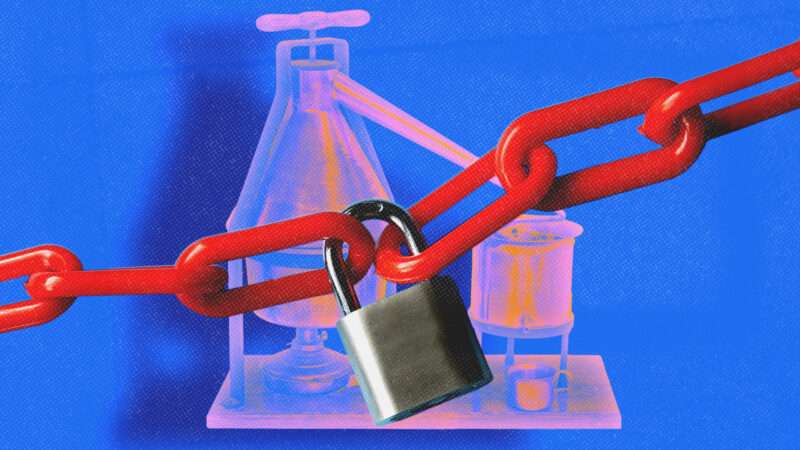
Earlier this week, lawyers for Ohio craft brewery owner John Ream, who wants to distill hard liquor at home for his own personal use but is barred from doing so by federal law, asked the U.S. Supreme Court to hear what could prove to be a major case about the reach of federal power.
The case is Ream v. U.S. Department of the Treasury. At issue is the constitutionality of the federal ban on home distilling. According to the federal government, the ban on making hard liquor at home is a legitimate exercise of the congressional power "to regulate Commerce…among the several States." As an authority for that view, the government has cited Gonzales v. Raich (2005), in which the Supreme Court upheld the federal ban on marijuana as applied to California medical marijuana patients whose use of the plant was legal under state law and whose cultivation and consumption of the plant took place entirely within the confines of that single state. "If Congress can regulate this under the Commerce Clause," protested Justice Clarence Thomas in dissent, "then it can regulate anything—and the Federal Government is no longer one of limited and enumerated powers."