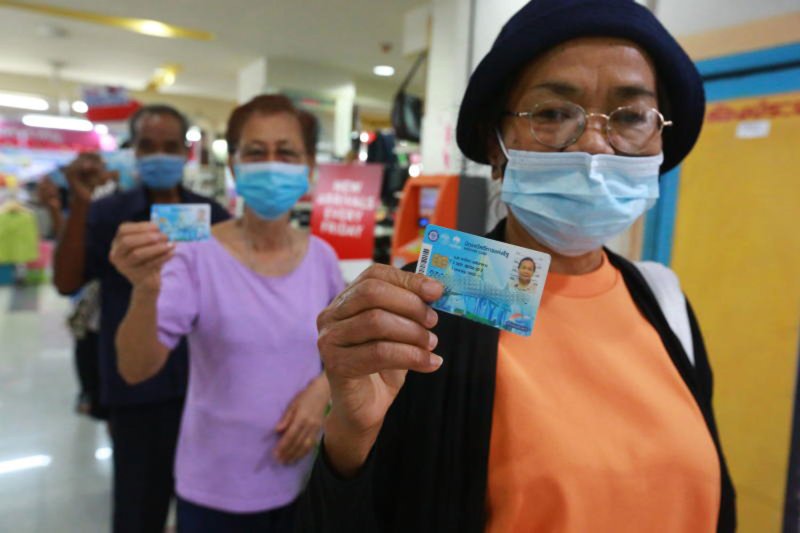
The Finance Ministry has revised the eligibility criteria for the state welfare card programme, a move expected to reduce the number of beneficiaries from 13.2 million people.
Speaking after the cabinet approved the new criteria, the first major revision since 2022, finance permanent secretary Lavaron Sangsnit said the main change is a shift from a household-based assessment that combined the income and assets of all household members to an individual-based assessment. This shift aims to address past instances where households containing both wealthy and low-income members were collectively granted benefits.

"The switch to individual-based criteria will make the database more precise, supporting the future development of the government's planned negative income tax system. Applicants must be Thai nationals aged 18 or older. If they fail to meet each qualification, they will lose eligibility for the welfare card," he said.
Five new disqualified groups are intended to improve the scheme's targeting accuracy.
First, students are not considered part of the labour force.
Second, company directors or partnership executives, meaning individuals listed as directors of registered legal entities with the Department of Business Development, are considered financially capable of supporting themselves.
Third, securities holders, defined as individuals with stock trading accounts or holdings in bonds and debt instruments.
Fourth, individuals paying high life insurance premiums, as those paying more than 12,000 baht annually in life insurance premiums are deemed financially capable.
Fifth, parents claimed as tax dependants by their children. If a child claims a parental support tax deduction (30,000 baht), those parents are disqualified from the welfare card programme.
In addition, applicants must meet limits on income, assets and debt, all capped at 100,000 baht.
Regarding financial assets, applicants must not have combined savings deposits and savings lottery holdings exceeding 100,000 baht, or they will be disqualified from the welfare scheme.
For liabilities, applicants with loans from financial institutions recorded with the National Credit Bureau totalling more than 100,000 baht will also lose eligibility, as this indicates a higher capacity to access credit than intended beneficiaries.
For property-related debt, home loans must not exceed 1.5 million baht, and auto loans must not exceed 1 million baht.
Credit cardholders may also be disqualified, as approval for a credit card is considered evidence of sufficient income and creditworthiness above the lowest-income threshold.
Vehicle ownership is also being reviewed. Ownership of cars and motorcycles, especially big bikes with engine sizes of 300cc or more, will be disqualified. However, vehicles used for work, such as tricycles, agricultural vehicles or tuk-tuks, remain exempt.
The ministry is opening identity verification for all existing 13.2 million cardholders via five channels during the period June 4-21. Verification can be completed via the Paotang app, the programme website, Krungthai Bank (KTB) ATMs and five state-owned banks: the Bank for Agriculture and Agricultural Cooperatives, Government Savings Bank, KTB, Government Housing Bank and the Islamic Bank of Thailand.
The eligibility results are scheduled to be announced on July 17, followed by a two-week appeal period.