
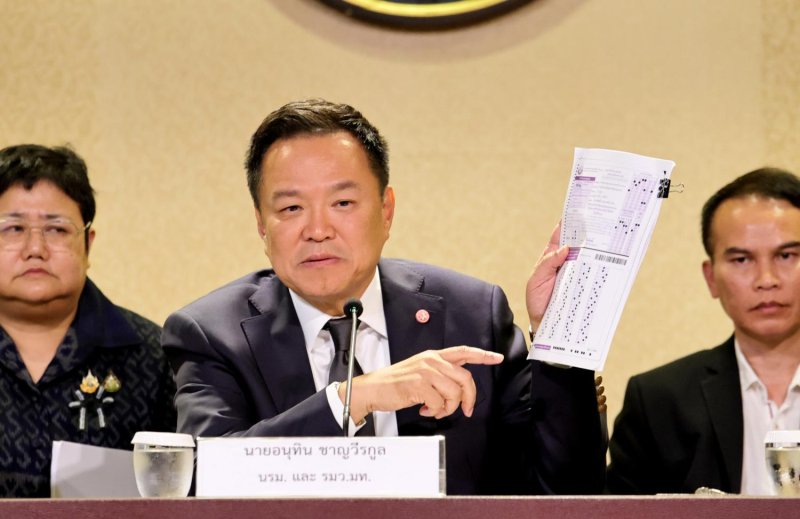
When the Bhumjaithai Party-led coalition came to power after February's election, believed to be backed by Thailand's conservative establishment, it appeared to herald an unusually stable period after two decades of political volatility and turmoil. But less than four months into its four-year term, the government appears shaky and unable to find its footing, with the prime minister embattled amid graft scandals and lacking clear policy direction. As a crisis of government legitimacy is now percolating, Prime Minister Anutin Charnvirakul will come under growing pressure to revamp his cabinet and bring in more technocrats to deliver results or face the prospect of an early exit.
When he entered office, Mr Anutin was already hounded by two major existing scandals revolving around the allegedly rigged Senate election from June 2024 and the "Khao Kradong" encroachment of state-owned land -- with the family of Bhumjaithai's powerbroker Newin Chidchob among the encroachers. Being in power only enabled the perception that the prime minister and his associates can exert influence over oversight agencies to delay and stymie the deliberations of these two cases. Had he been able to govern with some policy thrust at the outset, it might have allowed his government to move forward and leave past scandals behind.






