
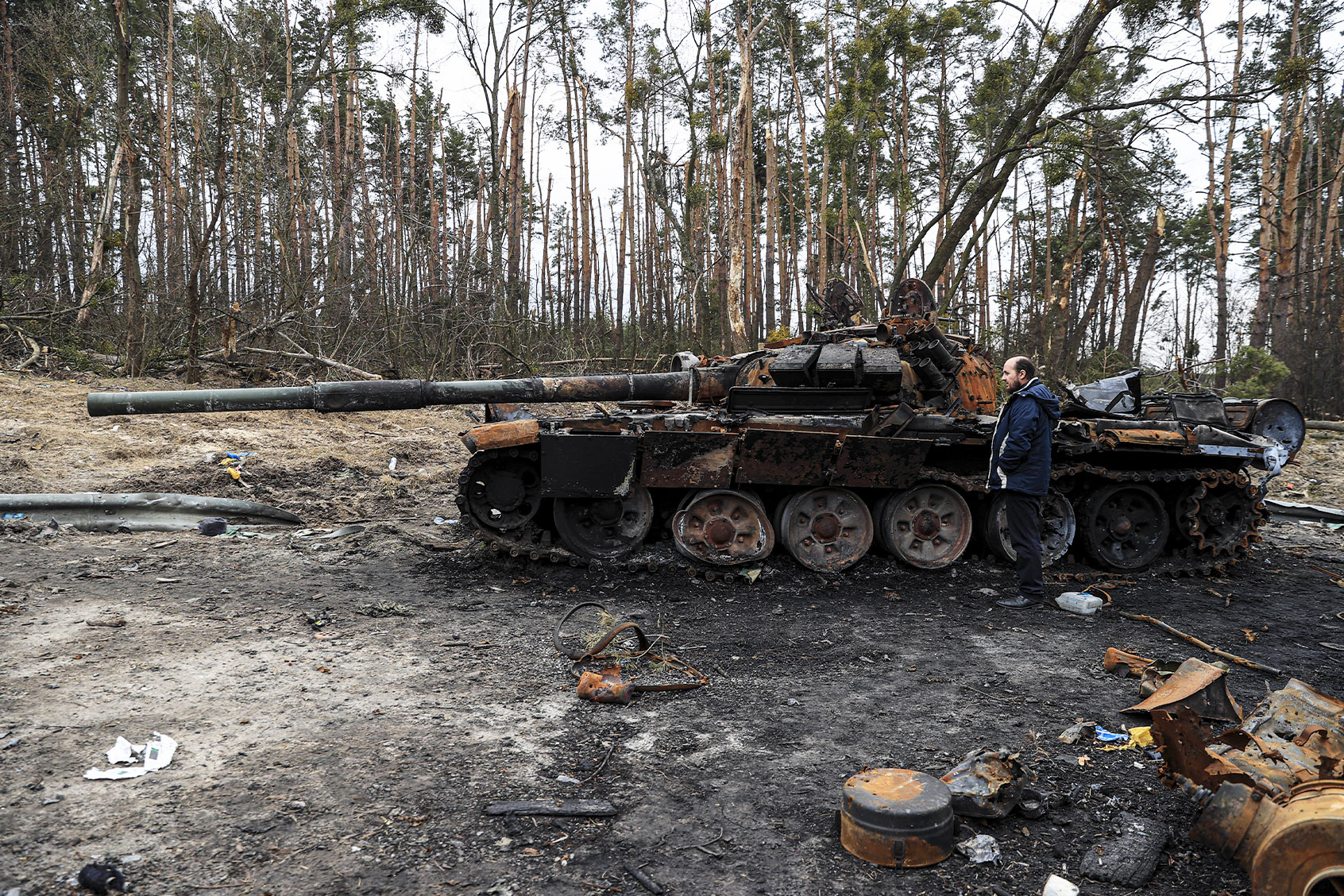
When Vladimir Putin ordered the Russian military to invade Ukraine more than two months ago, he no doubt expected an easy victory from a lightning-fast assault intended to crush the smaller opposing force. This spectacular victory was meant to advance the Russian president's vision of a new manifest destiny, bringing his country closer to re-establishing itself as an imperial power on the global stage. But Putin's gambit failed in grand fashion. Instead of celebrating a victory on May 9 — the anniversary of the Soviet victory over Nazi Germany in World War II — the Russian military is trying to reorganize itself after a series of stunning defeats and great losses in both materiel and personnel.
Speed was the key element in the Russian plan, but surprisingly strong and effective resistance from the Ukrainian military, and the Ukrainian people as a whole, exposed the Russian military's many weaknesses: Logistical capabilities were lacking, troops appear poorly trained and lack motivation, equipment has not been properly maintained. Russia's military now appears to be running short of ammunition, fuel, spare parts and even soldiers.












