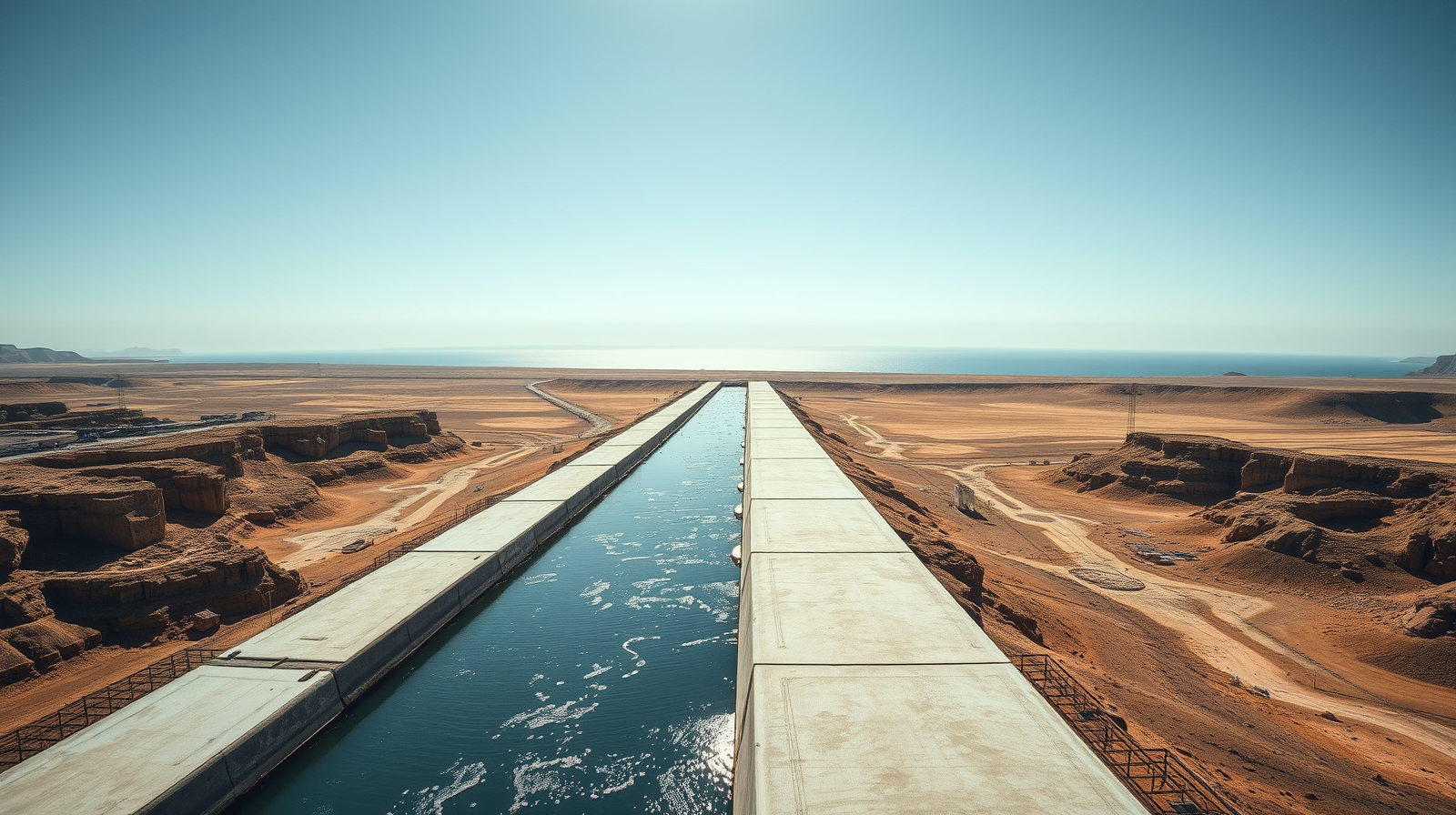
More than a century ago, engineers proposed an audacious idea for Egypt's Western Desert, cutting a canal from the Mediterranean Sea into the Qattara Depression, a vast basin sitting well below sea level, and using the resulting flow of water to generate electricity indefinitely. The concept first surfaced around 1912 and was developed further by British geologist John Ball in 1927, who mapped the depression in detail and outlined how the elevation difference between the sea and the basin could be converted into a steady, self-sustaining source of hydroelectric power. More than a hundred years later, the idea has still never been built, yet it continues to resurface periodically as engineers revisit its potential. Modern renewable energy advocates occasionally revisit the concept alongside newer technologies like solar power, wondering whether Egypt's abundant desert sunlight might eventually offer a less environmentally disruptive path to similar large-scale electricity generation.
Get breaking news anytime, anywhere. Download the TOI app now!