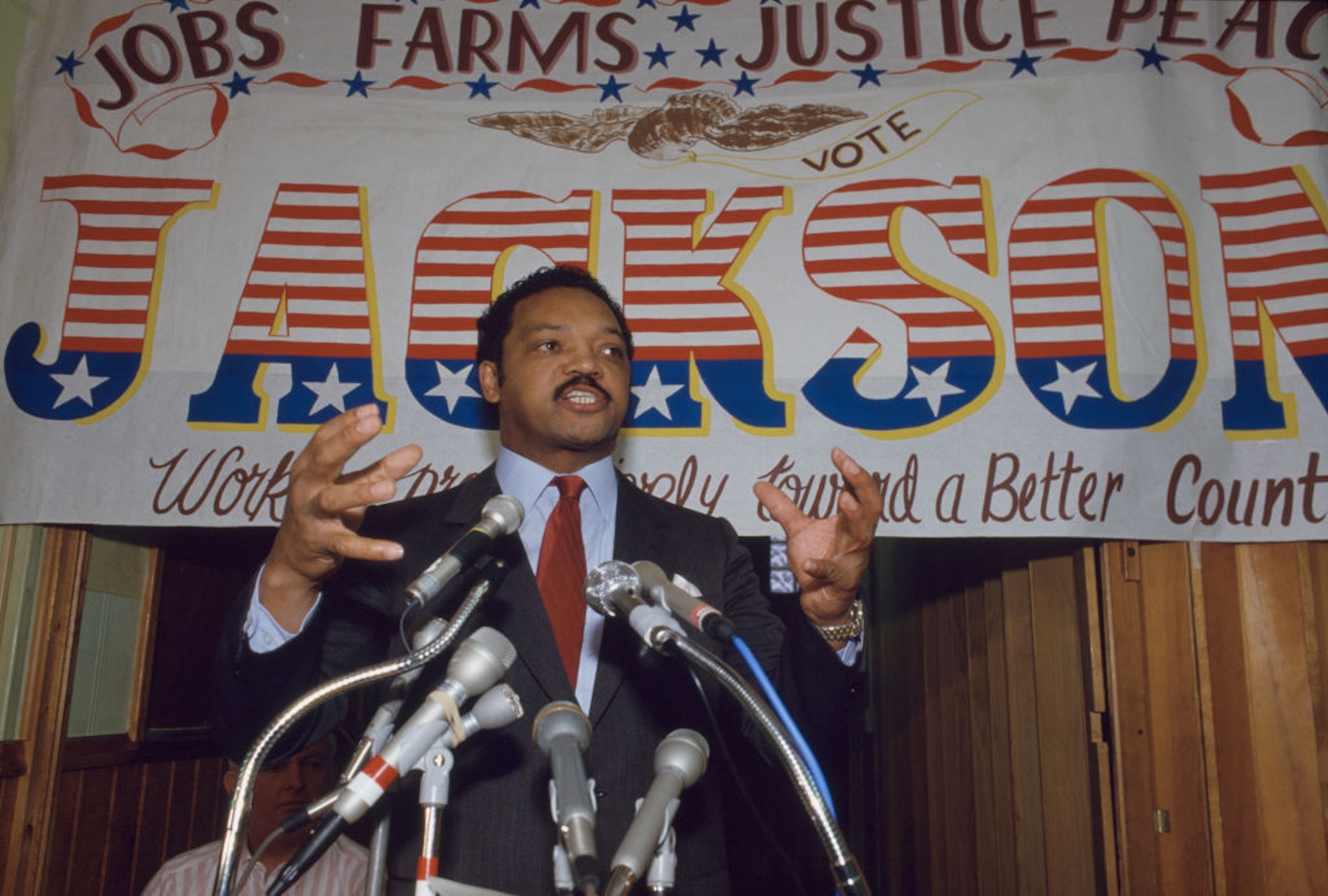
In May 2000, a few months before I left my native southeastern Kentucky to attend college in Washington, D.C., the Rev. Jesse Jackson came to a nearby town. The civil rights leader and two-time Democratic presidential candidate, who died on Tuesday at the age of 84, spoke at the commencement of Union College (now Union Commonwealth University), a small liberal arts college, and being a young politico, I had to go. What I heard and witnessed that day in a gymnasium in the middle of coal country has remained with me all these years later.
Jackson’s visit, and the lead-up to it, sparked debate. Republicans who had been forged in the era of Ronald Reagan, with his dog-whistle depictions of mythical — and Black — “welfare queens” sponging off government assistance, were predictably dismissive, and they were joined in their criticism by some conservative Democrats. Jackson had spent years being pilloried by the right, especially by the likes of Rush Limbaugh and Fox News, which was still in its infancy, and the attacks had taken their toll, leaving many suspicious of him and his motives. Along with his buddy, the Rev. Al Sharpton — the right had conflated the two and made them simpatico, when in fact they ran separate organizations and had different approaches to activism — Jackson liked to “stir things up,” some locals said, code for “Black folk should keep quiet and know their place.”