
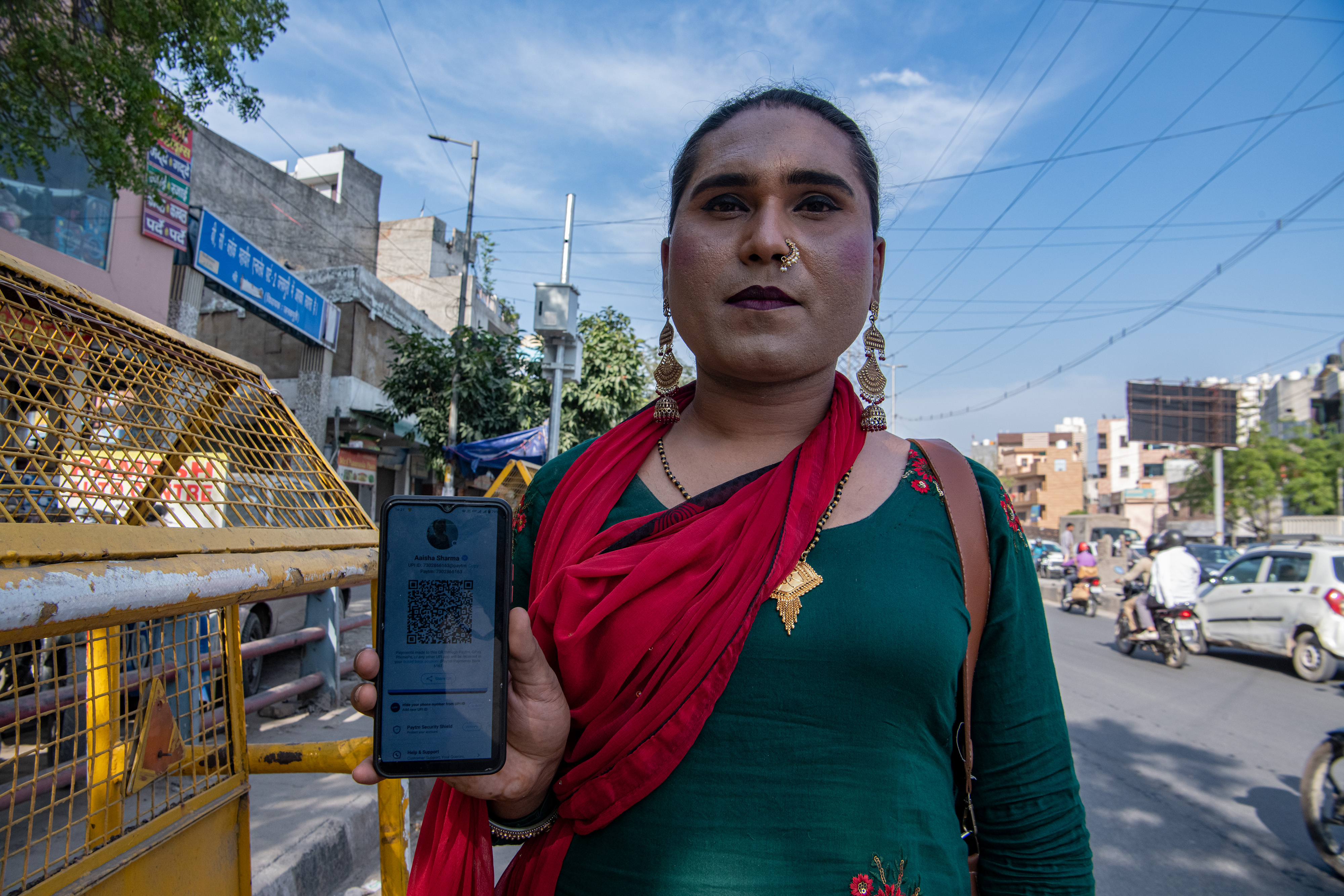
At a traffic signal in the Indian capital, Ayesha Sharma, a 29-year-old transwoman dressed in a traditional tunic and pants with scarf, holds up a smartphone with a QR code on it as the signal flashes crimson and vehicles come to a stop. A commuter scans the code and her account is deposited with 10 rupees ($0.12), an easy addition to her panhandling.
The rise in digital transactions and instant payment interfaces like the one used by Sharma, are helping marginalised communities like transgender people in managing their finances.








