
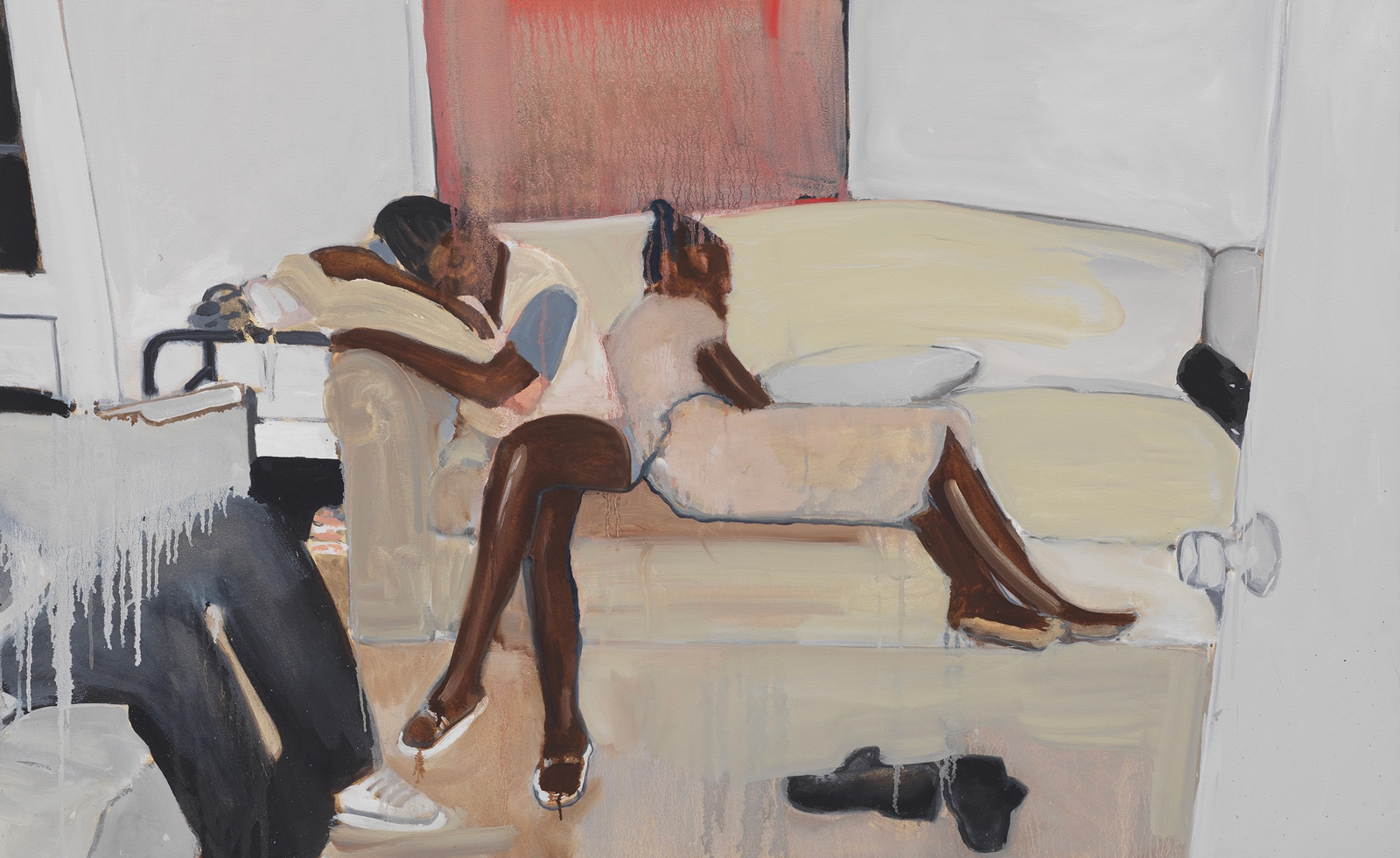
The figures in Noah Davis’s paintings, portrayed within modernist architecture, in domestic interiors, or in public places of leisure, are invariably black. They are ordinary men, women, and children intimately captured mid-repose, at play, or going about their daily lives. In some works, they’re projected into extraordinary scenarios that are futuristic, cinematic, unsettling and enigmatic. Davis’s representation of black life is at the core of his painterly interrogation of the fiction of difference. Or, in the artist’s own words, “Race plays a role in as far as my figures are black. The paintings aren’t political at all though. If I’m making any statement, it’s to just show black people in normal scenarios, where drugs and guns are nothing to do with it.”
First capturing the art world’s attention in 2007, Davis, up until his untimely death, in 2015, from a rare cancer at the age of 32, has authored a rich and magnetising vernacular whose idiosyncrasy is yet to be fully acknowledged. Davis’s ability to switch between canonized painting styles and make them his own while referencing wide-ranging influences from Rothko to Bacon, Kerry James Marshal, Marlene Dumas, Peter Doig and Luc Tuymans, or from Leipziger Schule to Magical Realism, enhances the psychologically demanding aura of his work. Now, nearly a decade after his passing, a touring retrospective sets out to bring Davis’s work to a wider audience.












