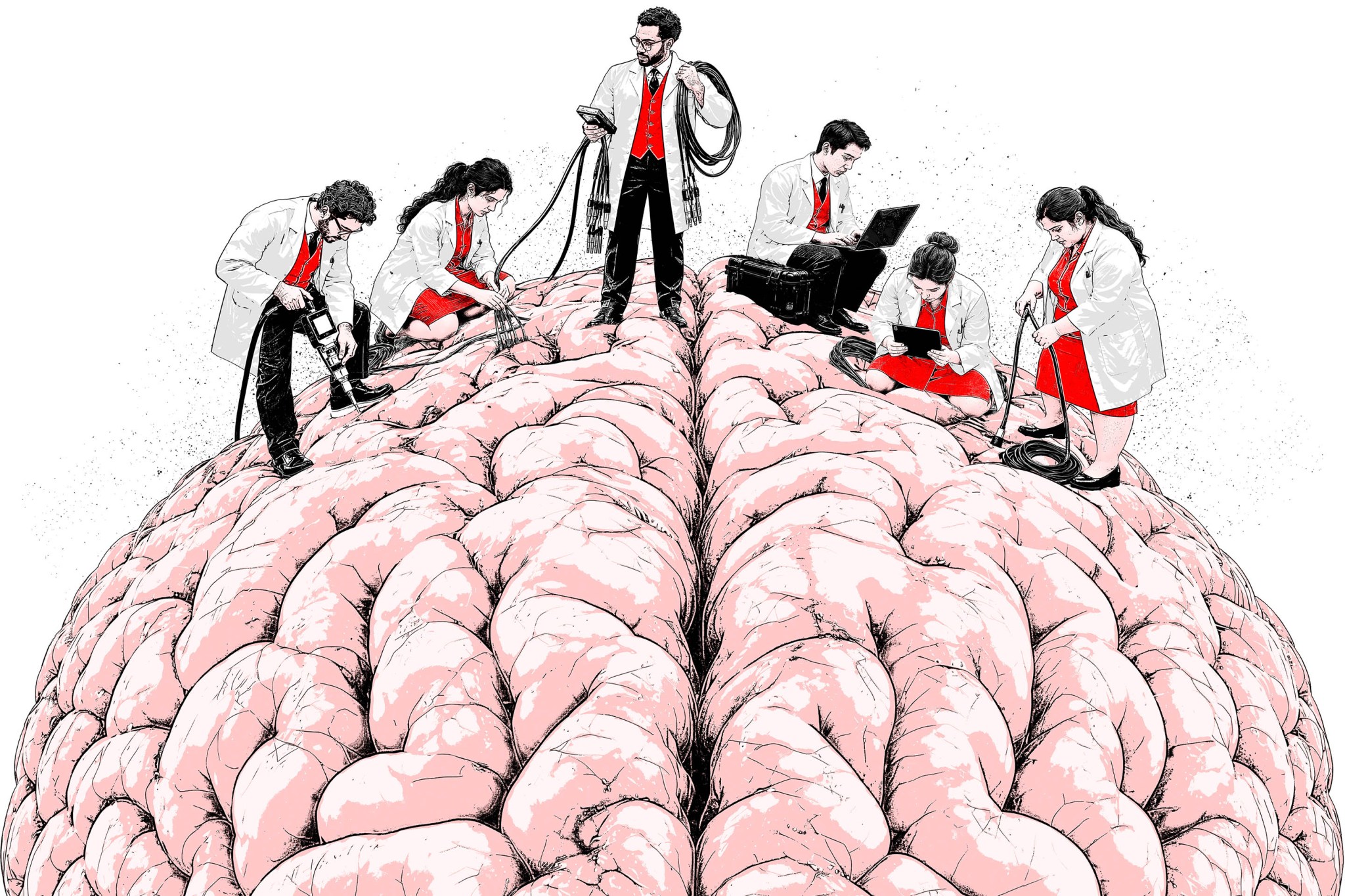
A robotic arm drills a circle into the patient’s skull, then places a quarter-size device onto the brain tissue. Dangling from it are 64 wires, each thinner than a human hair. Electrodes along the wires pick up electrical signals from neurons in the brain, and the implant transmits that data to a phone or tablet. The patient can text friends, post on social media, and even play video games—all without lifting a finger.
That’s the promise of the N1 implant made by Neuralink, the brain-computer interface (BCI) company owned by Elon Musk. Neuralink has made science fiction a reality for the approximately 26 people using the device today in the product’s testing phase. All have severe disabilities, but Musk founded the company in 2016 with the goal of far broader adoption. In 2017 he argued that humans will need to connect our brains to technology to keep up with artificial intelligence and avoid “being left behind and being effectively useless, or like a pet.” By 2025, Neuralink was valued at roughly $9.7 billion.