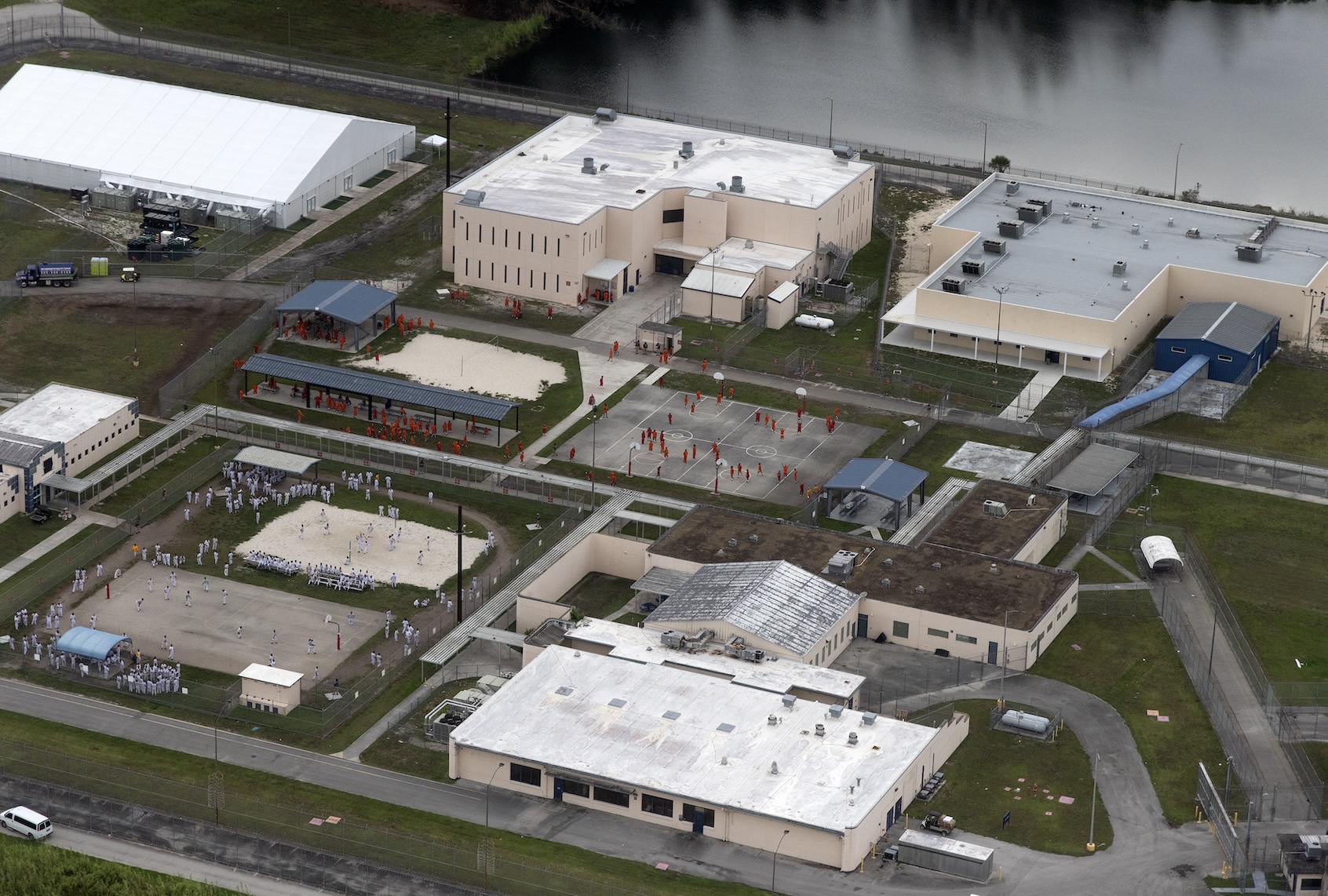
The immigration enforcement crackdown orchestrated by President Donald Trump and Stephen Miller, the White House deputy chief of staff, has drawn parallels to some of the darkest moments in history, including the use of concentration camps. Mass arrests of thousands of immigrants, including nighttime and after-school raids, the use of children as bait, and the shooting of a civilian monitor — all of it leads back to a network of notorious prisons, from “Alligator Alcatraz” to Camp East Montana, a tent facility in the Texan desert where this month a Cuban migrant was allegedly murdered by guards. Things have escalated to such an extent that some people are no longer just debating whether this resembles a concentration camp regime, but which ones it most resembles.
In 2018, author and journalist Andrea Pitzer wrote “One Long Night: A Global History of Concentration Camps,” a book detailing the continuous history of concentration camp systems in the last century — systems she defines as designed to incarcerate civilians on the bases of race, political affiliation, ethnicity, religion or some aspect of who they are, rather than what they’ve allegedly done. Much of its workings occur outside whatever is the existing legal system in that country. In the United States, this has manifested in the form of detention without trial, abuse and even killings that have run afoul of the law, and the suppression of documentation and accountability.