
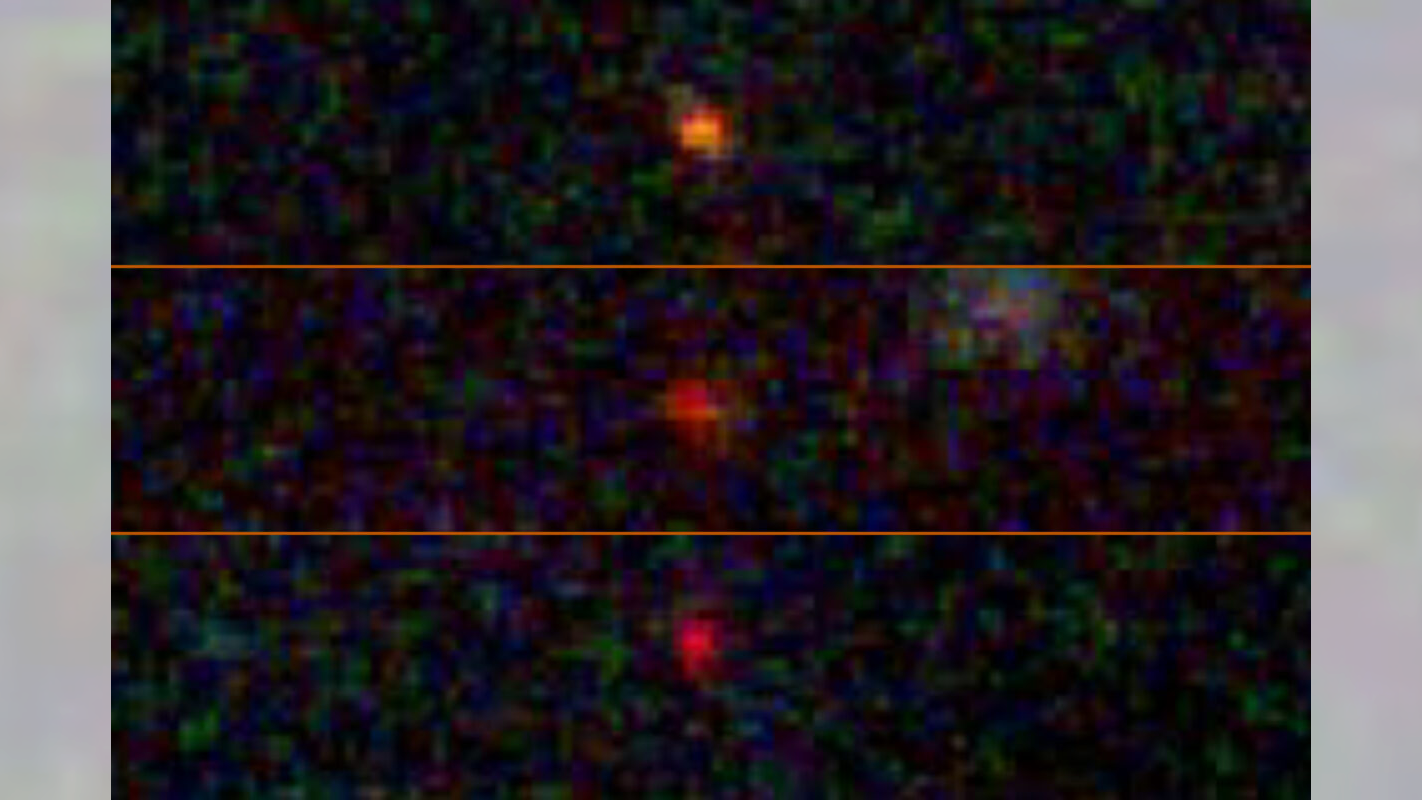
The James Webb Space Telescope (JWST) may have found evidence of a strange and elusive type of star that only existed in the very early universe, when invisible dark matter was one of the only available fuel sources.
New research suggests that three of the earliest objects identified as galaxies by the JWST aren't galaxies at all, but rather "dark stars" — immense, ultrabright hypothetical objects that are powered by dark matter rather than nuclear fusion. If the theory is correct, then this could finally help scientists better understand dark matter, the universe's most mysterious component.