
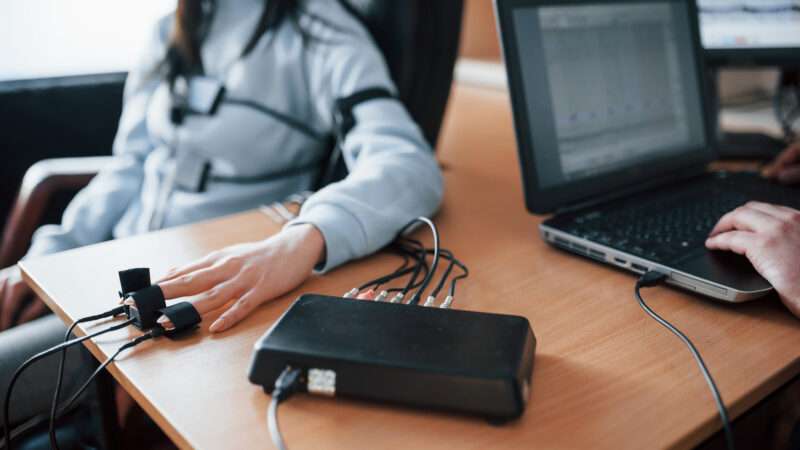
You've probably seen a lie detector in a movie or TV show, its stylus scratching an ink line across a scrolling page and jumping when the subject lies. Sometimes the polygraph is presented as infallible; sometimes its scrutiny can be evaded. In a spy thriller, the hero might put a pin in his shoe: Stepping down on a sharp point, the theory goes, will cause sufficient stress to spike his blood pressure, disguising false statements. In other tales, talented operatives can simply meditate their way down to a state of calmness and therefore appear not to be lying.
Even in the early days of the lie detector, the device's advocates seemed dimly aware that simply being questioned by the police might make a suspect flustered or nervous and, thus, perhaps give the impression of being untruthful. Whose blood pressure wouldn't spike when faced with criminal charges? Sure enough, police quickly found that people who were given polygraphs tended to panic. They also tended to confess: to all sorts of offenses, from card games to illegal alcohol, separate from the crimes under investigation.








-copy-29e15046.jpeg?w=600)



