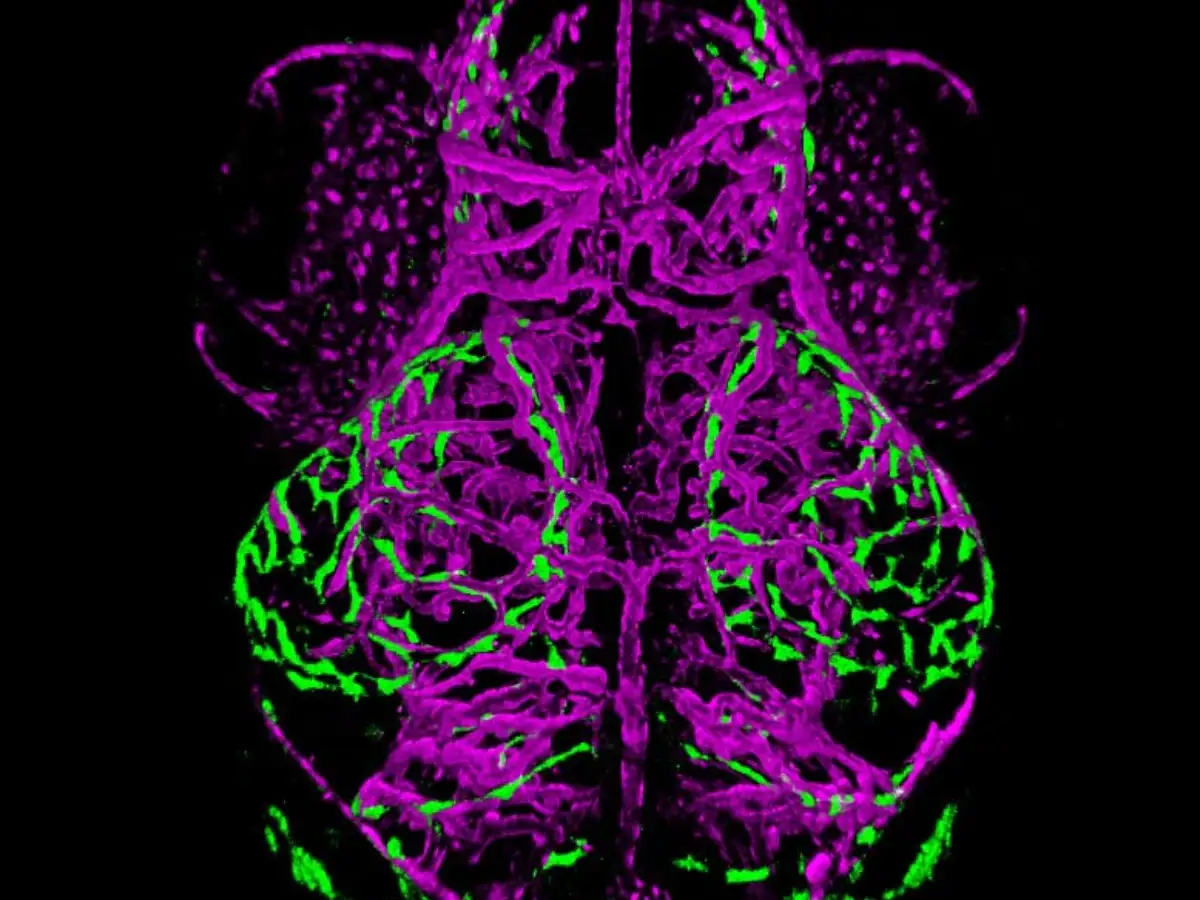
Imagine trying to understand how a city functions by watching one traffic light at a time. That’s essentially how neuroscientists have long studied the brain, a handful of neurons at a time. A team at MIT has now built a new high-speed microscope that images activity across nearly the entire brain of a larval zebrafish at once, scanning it every five milliseconds, roughly 200 times a second, and tracking how electrical activity spreads after a pulse of ultraviolet light.
Why neuroscience has been stuck watching reruns, not live TV