
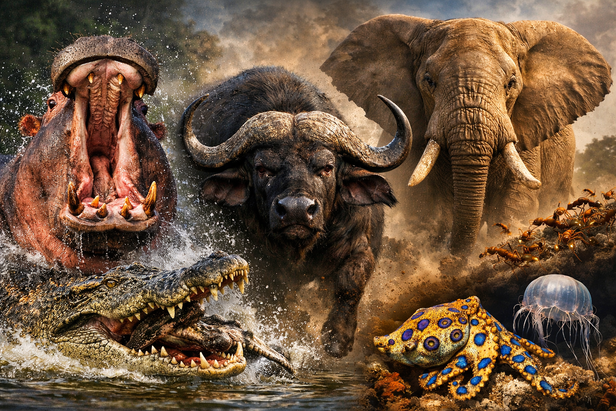
In the wild, aggression is not about anger or emotion in the human sense. It is a survival strategy shaped by millions of years of evolution. Animals become aggressive to protect territory, secure food, defend their young, or compete for dominance. What appears terrifying to humans is often a deeply practical response to survival pressure. Across land, water, and air, some species have developed reputations so intense that even experienced researchers approach them with caution.
While aggression varies by situation, scientists define it as behavior that can cause harm or threat to another organism, often within the same species or when defending resources. It is important to understand that even the most aggressive animals are not constantly dangerous. Most attacks occur when they feel threatened or cornered, not out of random hostility.