
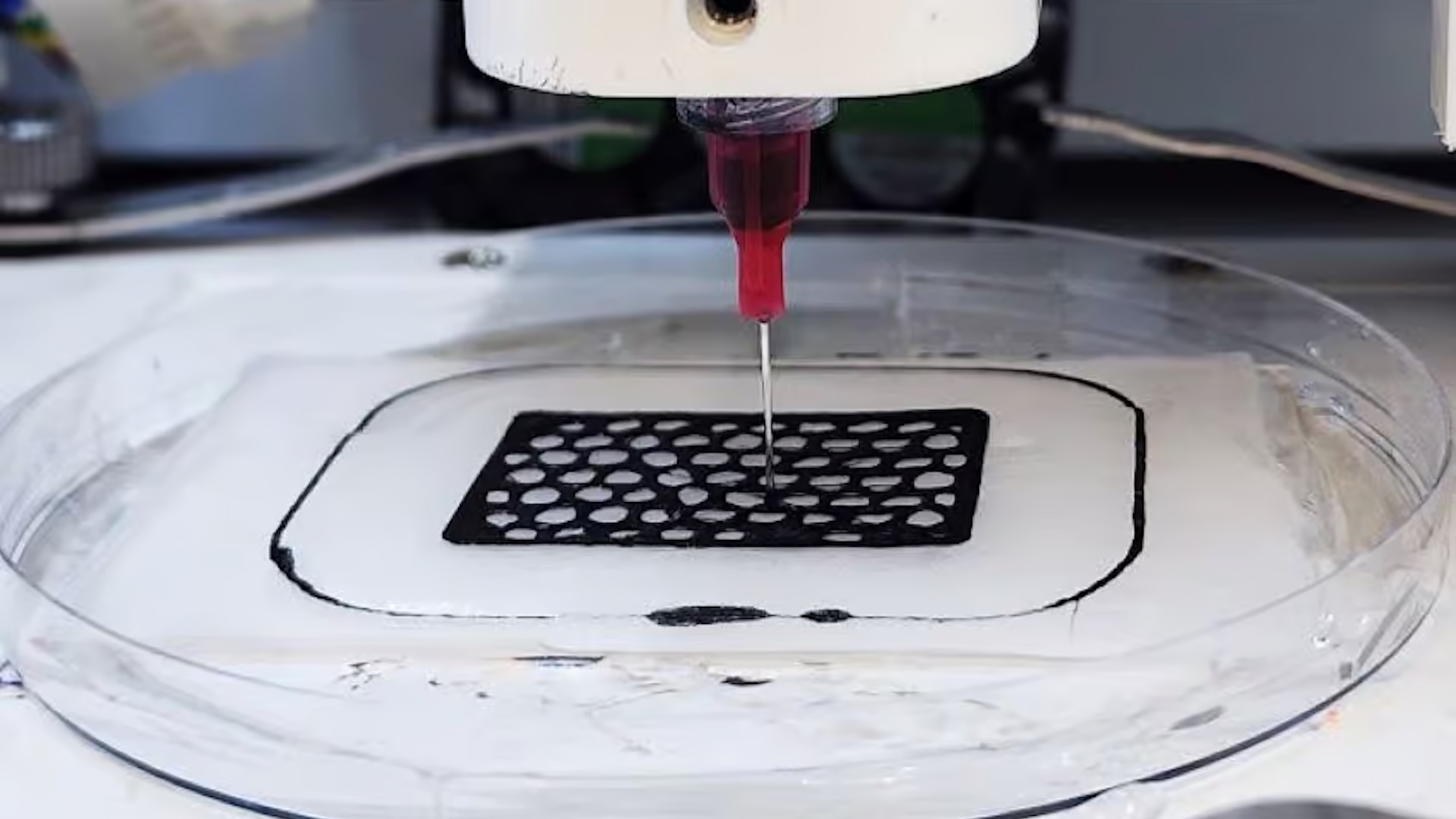
Scientists from the U.S. and Korea have developed an innovative new ink for 3D printing that can build easy-to-recycle electric circuits and other structures without the need for heat, light, or toxic chemicals. Their research was recently published in Nature Communications, supported by the National Science Foundation in the U.S. and the National Research Foundation of Korea.
In most forms of 3D printing, the raw material requires a combination of heat, pressure, and light to become a rigid structure. In FDM printing, the filament must be melted and then cooled into its formed shape. With resin 3D printing, ultraviolet light is applied to the liquid material to harden and cure it.













