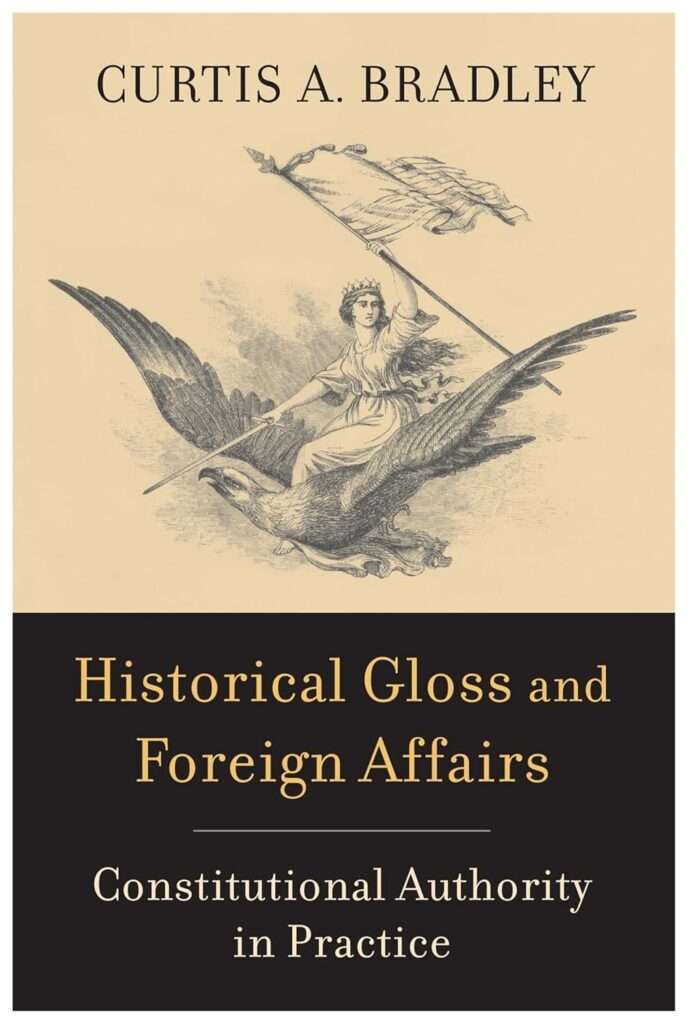
This is the fifth of five posts about my new book, Historical Gloss and Foreign Affairs: Constitutional Authority in Practice. In the last several posts, I discussed examples of foreign affairs authority that have been heavily informed by historical practice. In this post, I address the concern that the historical gloss approach to constitutional interpretation unduly favors presidential authority.
The three examples that I've covered in my prior posts all involve a growth of presidential foreign affairs power over time, and, as I discussed in those posts, historical gloss is a mainstay of the executive branch's constitutional reasoning.