
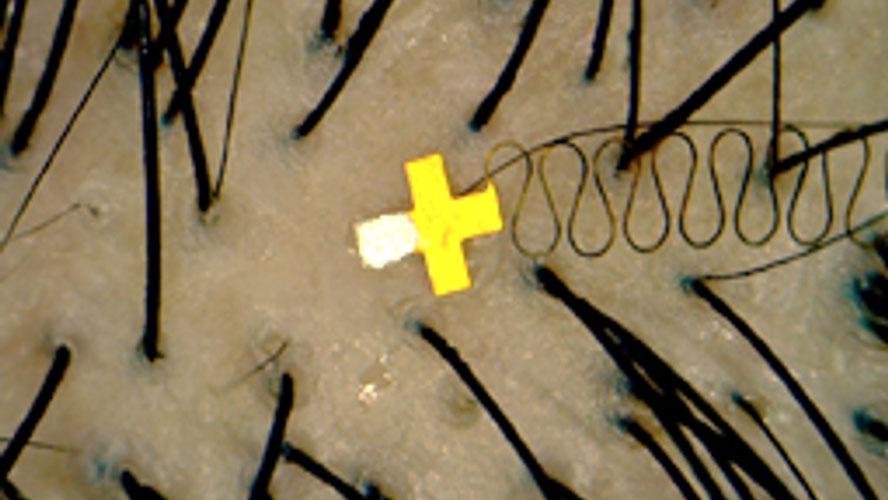
Researchers from Georgia Tech have developed a tiny, minimally invasive, brain-computer interface (BCI). The device is small enough to fit between hair follicles, and need only be inserted very slightly under the skin. It is thought that this super-compact new "high fidelity" sensor will make continuous everyday use of BCIs a more realistic possibility.
For many tech enthusiasts and futurists, BCIs play a large role in the expected evolution of human interaction with tech. However, some of the most advanced BCI systems we know of today are pretty bulky and rigid. Look at Elon Musk's Neuralink implant technology, for example.