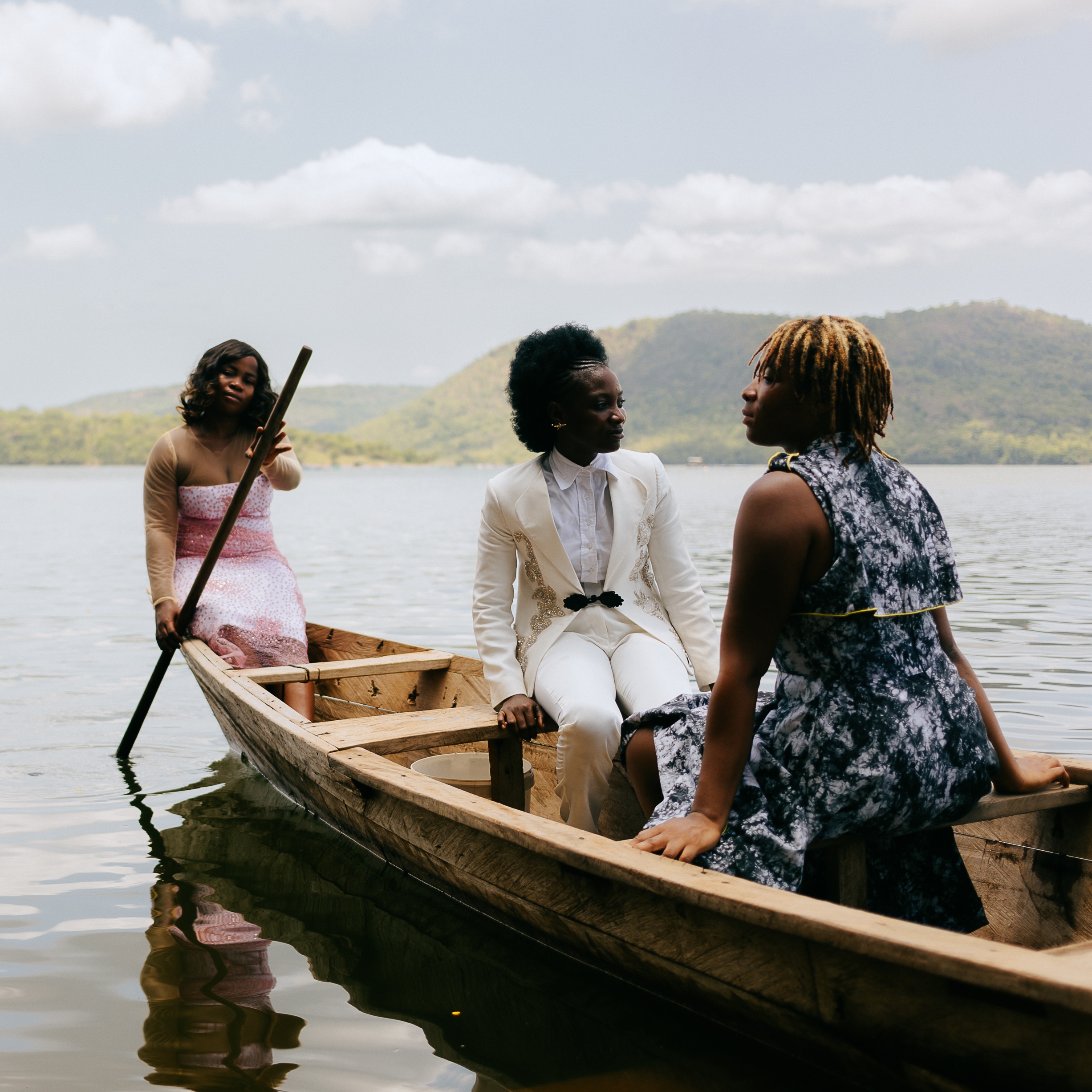
In the sweltering heat of an overcast day in Accra, walking up the steps to the atelier of the famous Ghanaian brand Poqua Poqu, we are met with young trainee Pamela Afatsawo, who welcomes us with her shy smile and open demeanor. She's wearing a beautiful flowy dress that she made herself, elegant kitten heels, and a long, soft bob. As she models her designs for her first-ever international fashion shoot, she explains: “This has been life-changing for me. Look at me, at my background. There was no hope, no ambition. I lost my mother just as I finished school in 2018. After that, no one supported me, even though I’d always been passionate about fashion. That’s why finding the Fashion Expressions project was such a life-changing experience.” As Chief of the Strategic Partnership Branch UNFPA Mariarosa Cutilo explains: “We wanted to design a program that would bring together UNFPA’s mandate–reproductive health among vulnerable populations–and Prada Group’s leadership in fashion to empower vulnerable women and girls through fashion.”
The Poqua Poqu workshop is in a wide room filled with sewing and cutting stations and colorful, intricate clothing hanging along the walls. It is a celebrated, women-led fashion house. Tragically, founder and head designer Pokua Poku-Mouhtiseb had recently died in childbirth, leaving Pamela to mourn another maternal figure in her life. Like many countries in the region, Ghana suffers from the effects of brain drain and the emigration of qualified medical personnel like midwives to Europe or America, which means that even successful, independent women like Pokua can fall victim to a depleted medical system. She was very loved by all her team, and there was a sadness under the day's excitement. As her husband Rida explains, “Pokua was a beautiful soul. She always believed in herself as a woman, she wanted to lift up young women to make sure that they have a skill to put food on the table for their families.”