
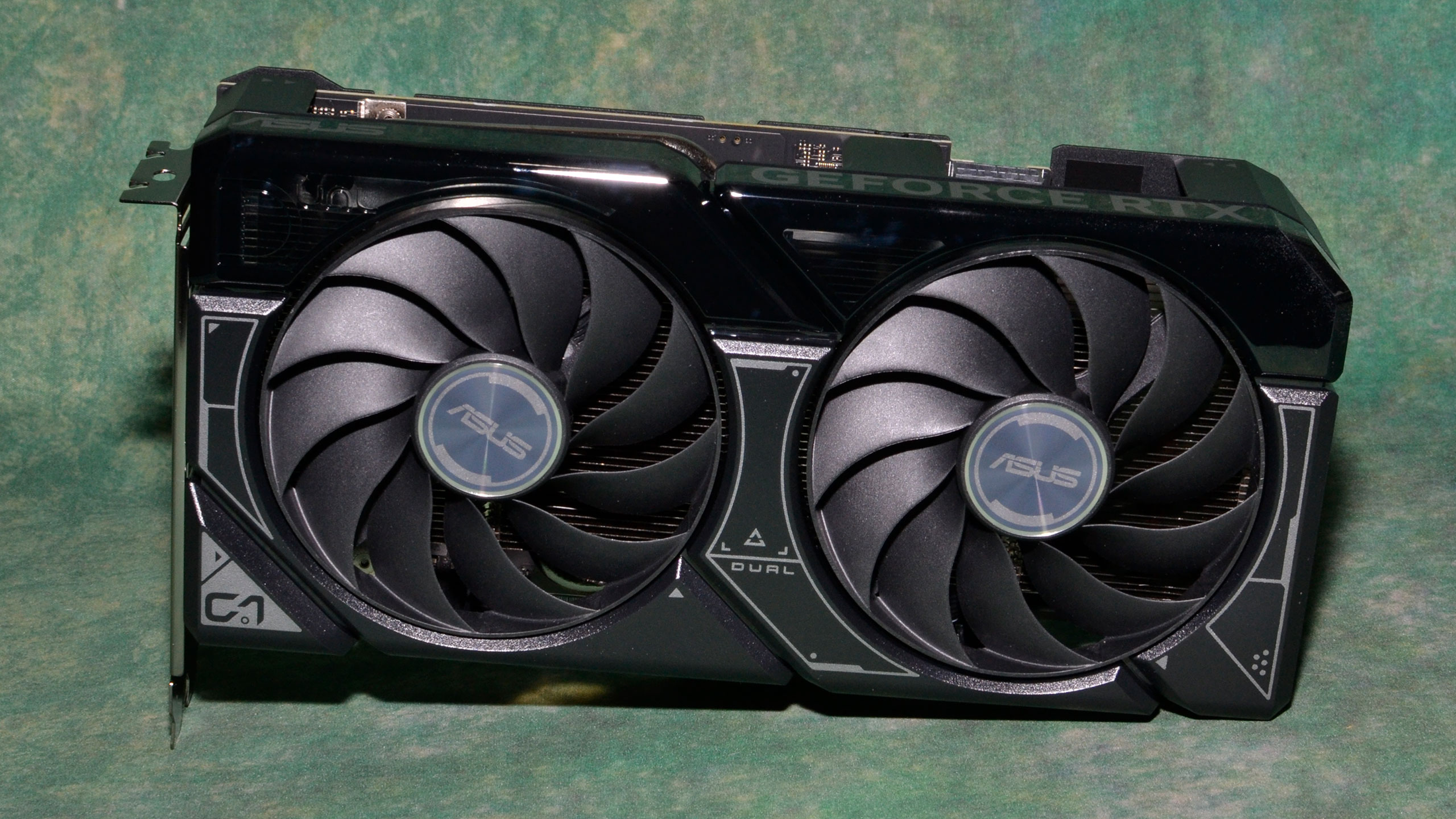
The Nvidia GeForce RTX 4060 drops the entry price for the Ada Lovelace architecture and RTX 40-series GPUs to $299. It lands between the former RTX 3060 and RTX 3050 in pricing, and while there are always compromises as you move down the price and performance ladder, it represents a potentially great value proposition. For those on a budget, it could be one of the best graphics cards, assuming performance is up to snuff.
There are deserved complaints about limiting the AD107 GPU at the heart of this card to a 128-bit memory interface, though the lower price compared to the RTX 4060 Ti takes out some of the sting. Still, the previous generation RTX 3060 came with a 192-bit interface and 12GB of memory, so this represents a clear step back in that area. We'll discuss this more on the next page, as it's an important topic.
We'll update the GPU benchmarks hierarchy later today, now that the embargo is over. The bottom line shouldn't be too surprising: In the vast majority of games, the new the RTX 4060 easily outperforms the previous generation RTX 3060, and it almost catches the RTX 3060 Ti. Toss in DLSS 3's Frame Generation and the dramatically improved efficiency and you can make a reasonable case for buying an RTX 4060 over a previous gen card. You won't tap into new levels of performance, but you'll get all the latest Nvidia features and upgrades.
The chief competition from AMD comes from two places. The latest generation Radeon RX 7600 undercuts Nvidia's price by up to $50 now, while the previous generation RX 6700 XT starts at $309, basically matching the RTX 4060 on price but providing 50% more memory and potentially better overall performance. Depending on pricing and availability, the RTX 3060 Ti (and other 30-series GPUs) may also be an interesting option, but we don't expect such cards to stick around for long, unless you're willing to purchase a used card.
Let's check the specifications, which were revealed over a month ago with the RTX 4060 Ti announcement. Nvidia allows reviews of the $299 MSRP cards today, while more expensive models are under embargo until tomorrow. We received an Asus RTX 4060 Dual OC model from Nvidia, which comes with a modest factory overclock, but it's still priced at $299.
There are twelve GPUs listed in the above table if you scroll to the right, representing the most useful comparisons for the RTX 4060, but the first column is the most pertinent. The new GeForce RTX 4060 uses Nvidia's AD107 GPU, which is also the same chip found in the RTX 4060 and 4050 Laptop GPUs.
The RTX 4060 uses the full AD107 chip, with 24 streaming multiprocessors (SMs), each with 128 CUDA cores. That gives the total shader count of 3,072. Astute mathematicians will note that this is less than the previous generation RTX 3060's 3,584 shaders. However, as with the rest of the RTX 40-series lineup, clock speeds are significantly higher at 2460 MHz, compared to 1777 MHz on the 3060. The result is that peak compute performance ends up being 19% higher.
Memory bandwidth is lower for raw throughput, at 272 GB/s compared to the RTX 3060's 360 GB/s. But the L2 cache has ballooned from 3MB on the 3060 to 24MB on the 4060, and Nvidia says that improves the effective bandwidth by 67% — to 453 GB/s. We'll discuss the memory subsystem and its ramifications more on the next page.
One thing to note is that the RTX 4060 comes with an x8 PCIe interface, just like the RTX 4060 Ti, where the RTX 4070 and above use an x16 link width. This is similar to the RX 7600 and previous generation RTX 3050, where cutting the additional PCIe lanes helps to keep the die size smaller. This shouldn't matter much with most modern PCs, but if you're planning to upgrade an older PC that only supports PCIe 3.0 with an RTX 4060, you may lose a bit of performance compared to what we'll show in our benchmarks.