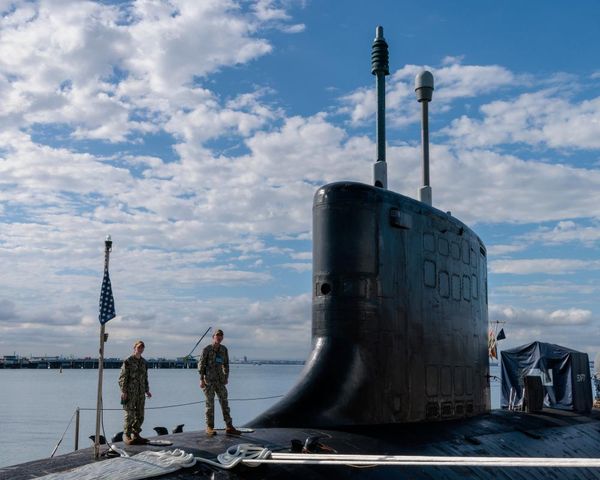

In a dangerous world, it is all to the good that the Prime Minister has committed an extra £500 million to help defend Ukraine — a useful adjunct to the billions committed by the US Congress — and intends to increase military spending to 2.5 per cent of national income by 2030. For good measure, he declares the country is on a war footing. Certainly, the UK badly needs to bolster troop numbers in the face of an expansionist Russia and the febrile Middle East, Yet the commitment to 2.5 per cent is not new but was made by Boris Johnson as PM. But there will be support from Sir Keir Starmer’s Labour Party which itself is aiming for increases in defence spending in the hope of outflanking the Tories.
But given pressure on public spending budgets highlighted yesterday where is the “fully funded” money to come from? Cuts in the civil service to pre-Covid levels is one answer. This would certainly be desirable because what were intended as short-term increases in numbers to deal with a crisis have all too easily bedded in, but the civil service union has promised to fight cuts, which could amount to 72,000 jobs, tooth and nail. The Chancellor wants to cut taxes, not raise them. The issue may be fudged until the election but it cannot remain in the long grass. The trade-off of soldiers for civil servants is an attractive scenario, but let’s see how it works out.