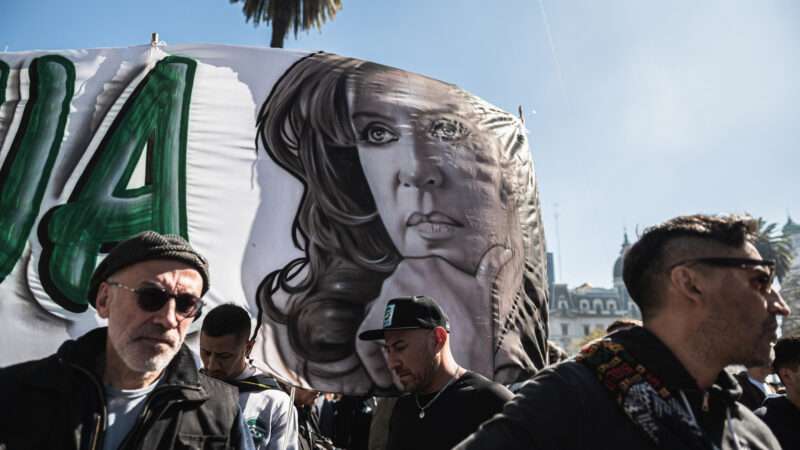
On September 1, a crowd gathered outside the Buenos Aires home of Argentina's vice president, Cristina Fernández de Kirchner (also known as CFK). They were there to signal support after a prosecutor asked for 12 years in prison for Kirchner following a corruption scandal that took place while she was president between 2007 and 2015. As CFK left her car and approached the building where she lives, a Brazilian man named Fernando André Sabag Montiel pointed a gun to her head. It misfired: Nobody was injured in the incident and crisis was averted. What came next, though, was deeply troubling.
Just as Argentines were recovering from the shocking news of the assassination attempt, the government decided to use it to go on the offensive against its political opponents. At midnight—despite the lack of any indication that the attack was politically motivated—President Alberto Fernández declared a national holiday for "reflection," contended that "hate" and "political violence" must be fought, and called for the masses to mobilize "in defense of democracy." In a message he forced all TV and radio stations in the country to broadcast, he accused the opposition, the media, and even the judiciary of being hateful. The implication was clear: Those who opposed him were at least partially responsible for the attempted assassination.