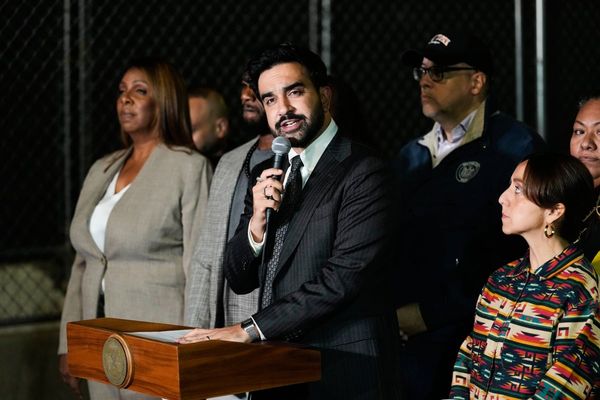
Was yesterday’s performance by the Texas House of Representatives intended to restore public faith in the body’s commitment to the rule of law? Separate the good cops in the GOP from the bad cops? Or prove that a legislature that spent a year cravenly ignoring the pleas of Uvalde victims’ relatives for common-sense gun safety laws before rejecting them outright while rushing through an attempt to put the Ten Commandments in every classroom isn’t really the 10th circle of hell? If so, the hearing leading up to a 121-23 vote to impeach Attorney General Ken Paxton for corruption was an epic fail.
What the public saw—regardless of the lawmakers’ intentions—was the eruption of fissures that have more to do with pride and power than justice. It was a cross between the state’s largest intra-party catfight and its most public self-inflicted gunshot wound, as the bad blood between Paxton and Texas House Speaker Dade Phelan, who serve as proxies for Trump and Republicans trying to distance themselves from Trump in advance of next year’s elections, finally spilled out into the open.
The lineup featured, on the one hand, GOP representatives who suddenly had a lot of worries about “due process,” “precedent,” and “evidence” that had not been evident while banning abortion and stripping transgender youth and their families of access to healthcare. Or during the next day’s vote, when the GOP ended their regular legislative session by singling out Houston, with its sizable Black population, for a different election process than the rest of the state. The thinly veiled voter suppression measure gives the secretary of state under certain conditions the power to run elections in Harris County, home to Houston and 4.8 million residents. It follows a bill approved days earlier that shifts the oversight of elections from its appointed elections administrator to the county clerk and county assessor.