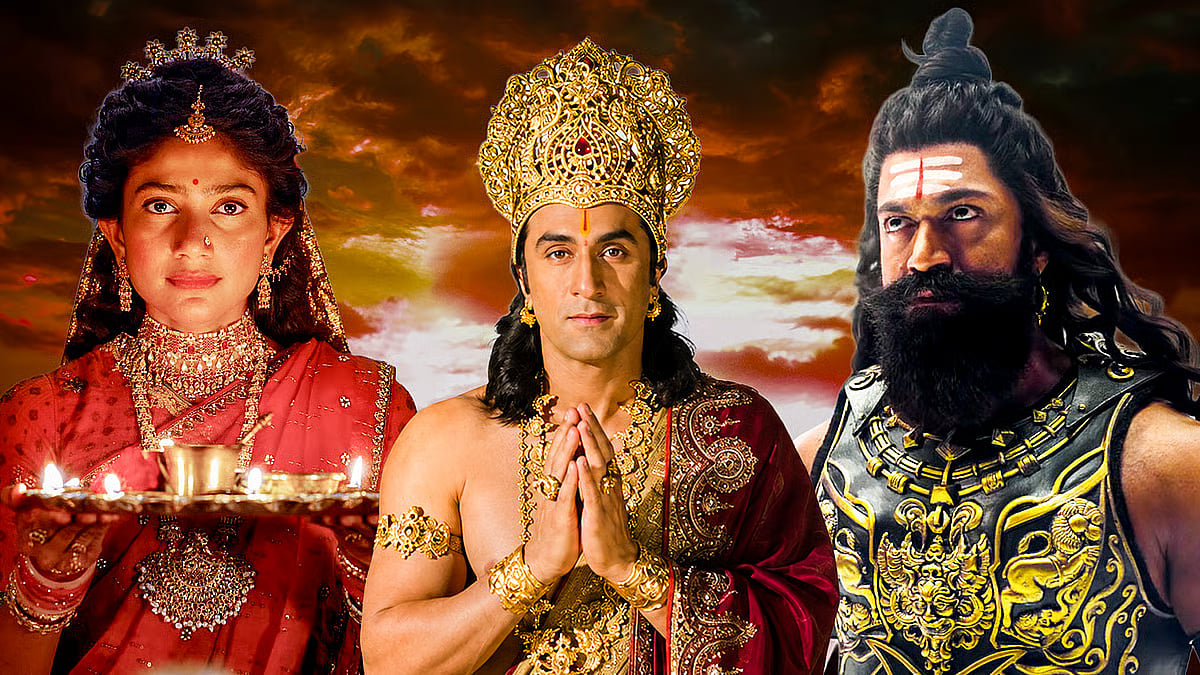
In one of the scenes in Nitesh Tiwari’s Ramayana: Part 1, Ram (Ranbir Kapoor) asks what the purpose of his birth is. He is vulnerable, confused, and deeply shaken by the odds that have consecutively been stacked against him. It is only in those fleeting moments, towards the end of the film, that we get some insight into the protagonist’s conflict in an adaptation that is otherwise deliberately held back. And this denial of interiority is neither without purpose nor limited to Ram.
Nitesh’s cinematic iteration of Valmiki’s epic anchors itself on caution. Everything is calculated, tepid even, in what seems like an attempt to prevent the story from making any detour that may offend bhakts or stir up controversy. But in its anxiety to avoid transgression, the film also relinquishes the artistic freedom to complicate inherited truths. By doing so, it reveals itself as a propaganda machine which flattens the interpretative potential of art and instead makes it a vehicle for cultural consolidation.