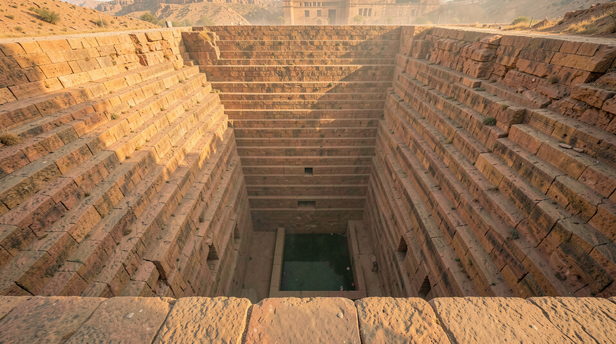
Most people arrive at Chand Baori and look down. The view from the rim is the famous one: a perfect inverted pyramid of steps narrowing toward a small rectangle of green water far below, the geometry so exact it seems drawn rather than built. But the stepwell was not designed to be admired from above. It was designed to be used from below, and the logic of its thirteen storeys only becomes clear when you read it from the waterline up.
Chand Baori was built sometime in the ninth or tenth century, during the reign of King Chanda of the Nikumbha dynasty, in what is now Dausa district in Rajasthan. The region sits on the edge of the Thar, where the water table is deep and rainfall unreliable. The stepwell was the answer: a structure that followed the water down rather than waiting for it to rise, and that kept it accessible at every level of the annual cycle, whether the monsoon had been generous or had barely arrived.