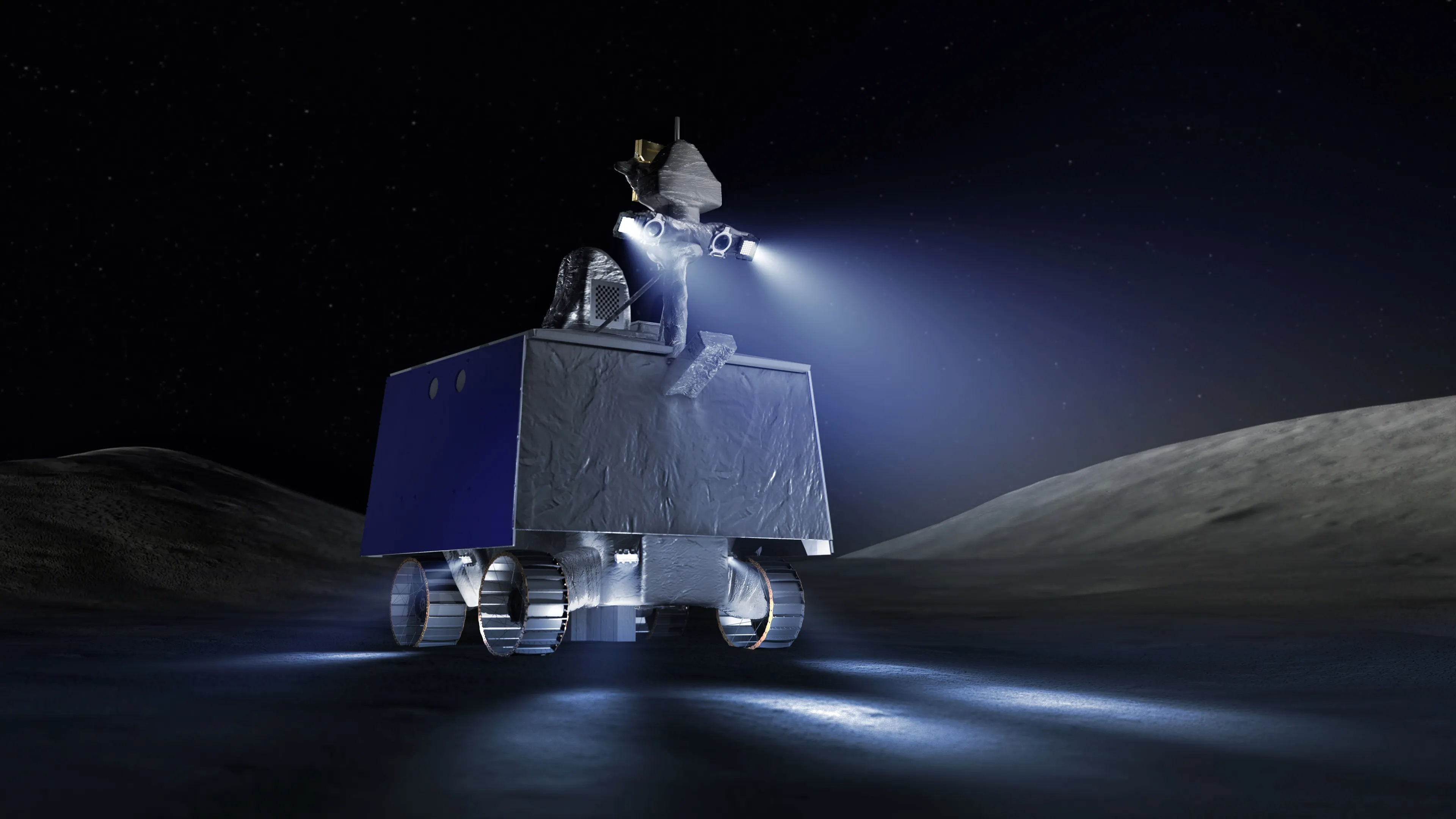
Teleoperated rovers could soon be working on the moon, with human controllers on Earth manipulating the rovers' tools virtually, allowing for greater dexterity when taking samples, digging or assembling.
Researchers from the robotics laboratory at the University of Bristol in England have tested their new teleoperations system at the European Space Agency's (ESA) European Centre for Space Applications and Telecommunications at Harwell in Oxfordshire. By controlling a virtual simulation of a rover, they were able to manipulate a robotic arm to dig a sample of pretend lunar regolith (called simulant). The process negates the need for camera feeds, which can lag because of the 1.3-second time delay between Earth and the moon. The signals between the teleoperators and robotic missions on the moon could in future be relayed by satellites belonging to ESA's planned Moonlight project.