
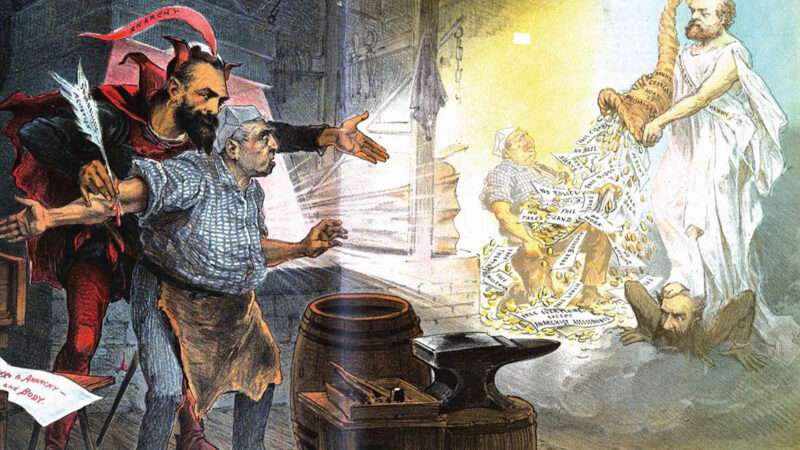
Henry George, a 19th century reformer who famously favored an end to all taxes except a levy on land, believed his system would allow us to "approach" the "abolition of government" as a coercive force. He also wrote that his single tax could fund various public services, transforming the state into "a great co-operative society." Depending on which way you tilt your head, he can sound like he's either almost an anarchist or almost a social democrat.
In Land and Liberty, the Georgetown University historian Christopher William England shows that both sides of George's thinking bore fruit after his death.












