
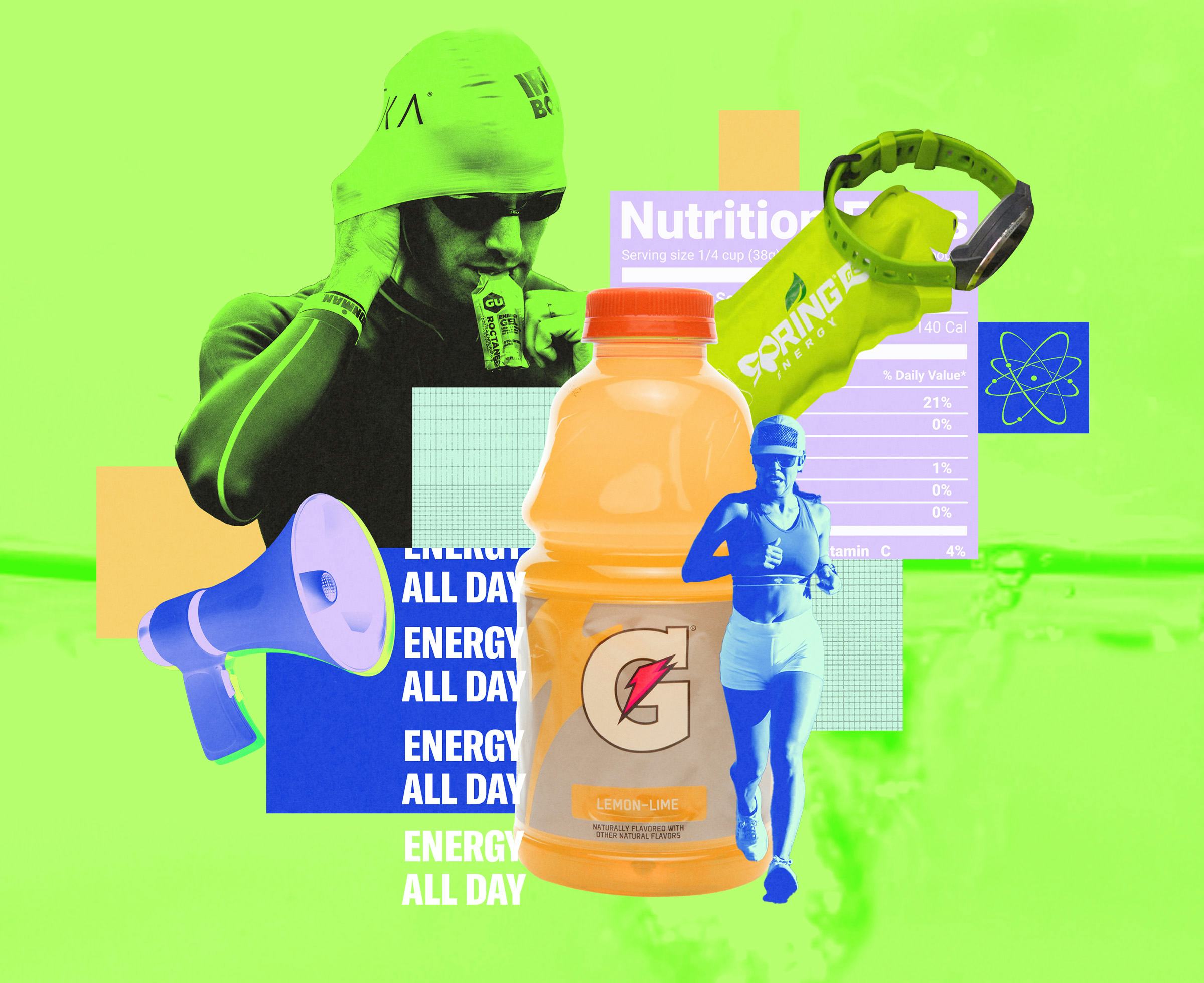
A couple of years ago, when my daughter Sandy was in fifth grade, she fell in love with Gatorade. A couple of times a week, she’d beg me for a few dollars so she could walk to the bodega a block from our apartment in Brooklyn and buy a 20-ounce bottle of the Cool Blue “flavor.” (I said no. Usually.) Her craving seemed to have erupted from nowhere, but she told me it had come from seeing other kids drink it. Which kids? “The sporty kids,” she said.
Frankly, I understood the appeal. I’m a runner, and after a sweaty Sunday trot of 10 to 14 miles, there’s little more satisfying than popping into a bodega, pulling a Gatorade from the cooler, and chugging it on the spot. After all, Gatorade, now owned by PepsiCo, has been engineered for precisely this purpose: It was invented in 1965 as a way to replace the fluids and nutrients — sodium, potassium, magnesium, sugar, and carbohydrates — that the University of Florida’s football team (the Gators, of course) sweated out during practice and games. Once the scientists and marketers added tasty flavors, the innovation took off as “the beverage of champions,” launching a whole new category of performance beverages that Fortune Business Insights predicts will grow to $36.35 billion in 2028.













