South Korea is giving up on its demand that North Korea fully abandon its nuclear weapons before any broader peace settlement, unification minister Chung Dong Young said on Thursday.
The two neighbours share deeply hostile relations and are technically still in a state of conflict, after the Korean War ended in 1953 with a ceasefire deal rather than a peace treaty.
It has long been South Korea’s government policy that talks to normalise the countries’ relations cannot begin until the North has abandoned its UN-sanctioned nuclear arms programme.
But now the government in Seoul says it will adopt a “peace first” approach in a historic shift, suggesting Pyongyang only freeze its nuclear development in an initial phase of talks rather than immediately denuclearise.
“We have effectively discarded the previous administration’s nuclear dismantlement-first and denuclearisation-first theories and shifted to a ‘peace first’ theory,” the minister told reporters.
Mr Chung argued that making denuclearisation a precondition for a settlement had failed and, as a result, dialogue had been frozen for seven years.
His ministry’s objective now was “the realisation of a nuclear-free Korean Peninsula”, replacing the long-standing emphasis on complete, verifiable and irreversible denuclearisation that underpinned South Korean and US policy for decades.
He said the policy shift was necessary as new estimates suggested North Korea’s nuclear arsenal had grown significantly. North Korea now possesses 60 nuclear warheads, and enough fissile material for 90, according to some estimates.
“Dialogue has been cut off for seven years,” Mr Chung said, according to Korea JoongAng Daily. “Put denuclearisation-first at the entrance to talks and the door won’t open.”
He pointed out “even the superpowers – the US and China – have effectively abandoned that doctrine”.
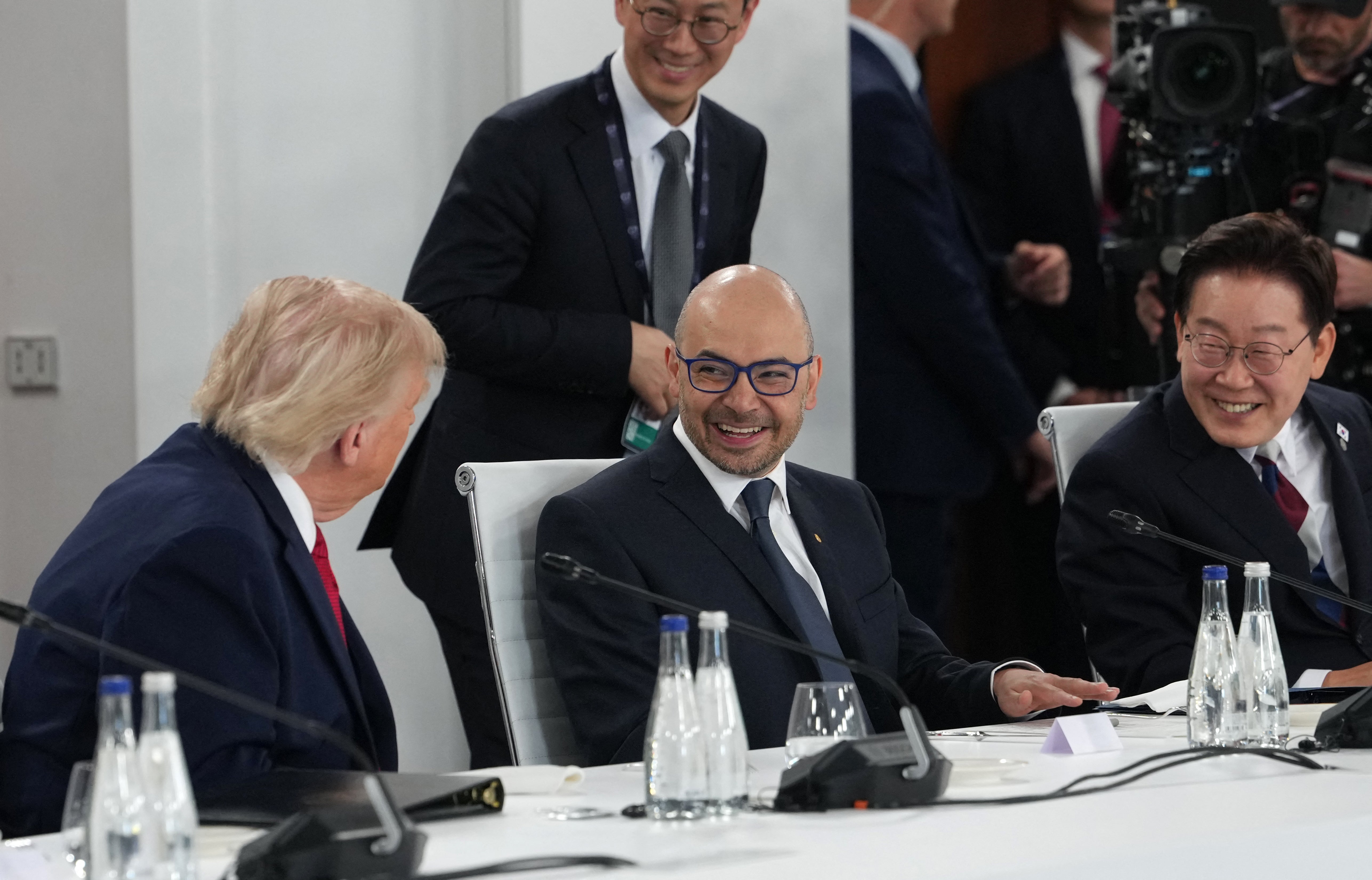
Mr Chung said South Korean president Lee Jae Myung had already discussed the freeze-first proposal directly with US counterpart Donald Trump.
The policy shift was part of a broader vision that Mr Chung described as “two peaceful states pursuing unification”, positioning Seoul’s approach in contrast to Kim Jong Un’s characterisation of inter-Korean ties as featuring “two hostile states”.
In February, the unification ministry had published the new Lee government’s blueprint for its North Korea policy, titled “Policy for Peaceful Coexistence on the Korean Peninsula”. It marked a departure from the previous administration’s hardline stance and put the focus on reducing tensions and building stable relations with Pyongyang.
Besides changing its stance on North Korea’s nuclear programme, the unification ministry said it wanted to reshape how North Koreans were viewed and discussed within South Korean society.
It proposes to change the language used for North Koreans settled in the South. Mr Chung urged media organisations to stop using talbukmin, meaning “North Korean defector”, and instead use bukhyangmin, literally meaning “people whose home region is in the North”.
Mr Chung reportedly argued the word “defector” carried negative associations and could reinforce “stigma and exclusion”, making it harder for these individuals to integrate into South Korean society.