
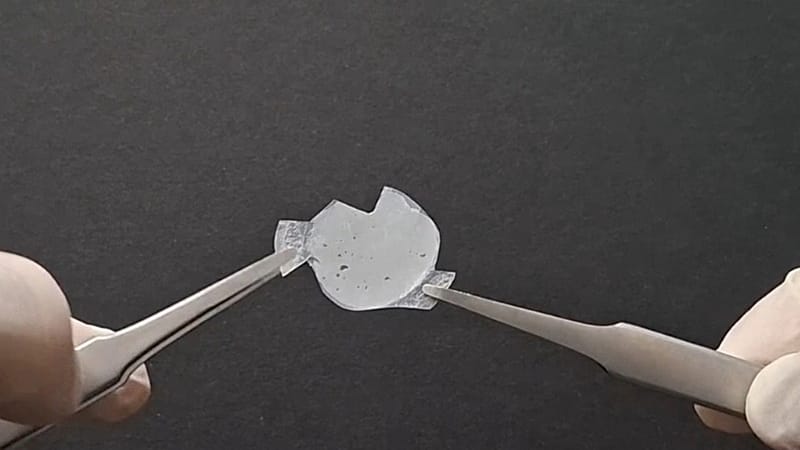
A team of researchers at the Institute of Micro and Nanotechnology (IMN-CNM, CSIC) has developed a nanomaterial capable of cooling sun-exposed surfaces without using electricity, an alternative that could ease the growing energy bill for cooling, which already accounts for nearly 20% of global electricity consumption.
The research, led by the Functional Nanoscale Devices for Energy (FINDER) group and published in the journal Nanophotonics, is based on daytime passive radiative cooling, a technique that exploits a peculiarity of the Earth's atmosphere: there is a band in the infrared spectrum, between 8 and 13 micrometres, through which heat escapes directly into space without being trapped.