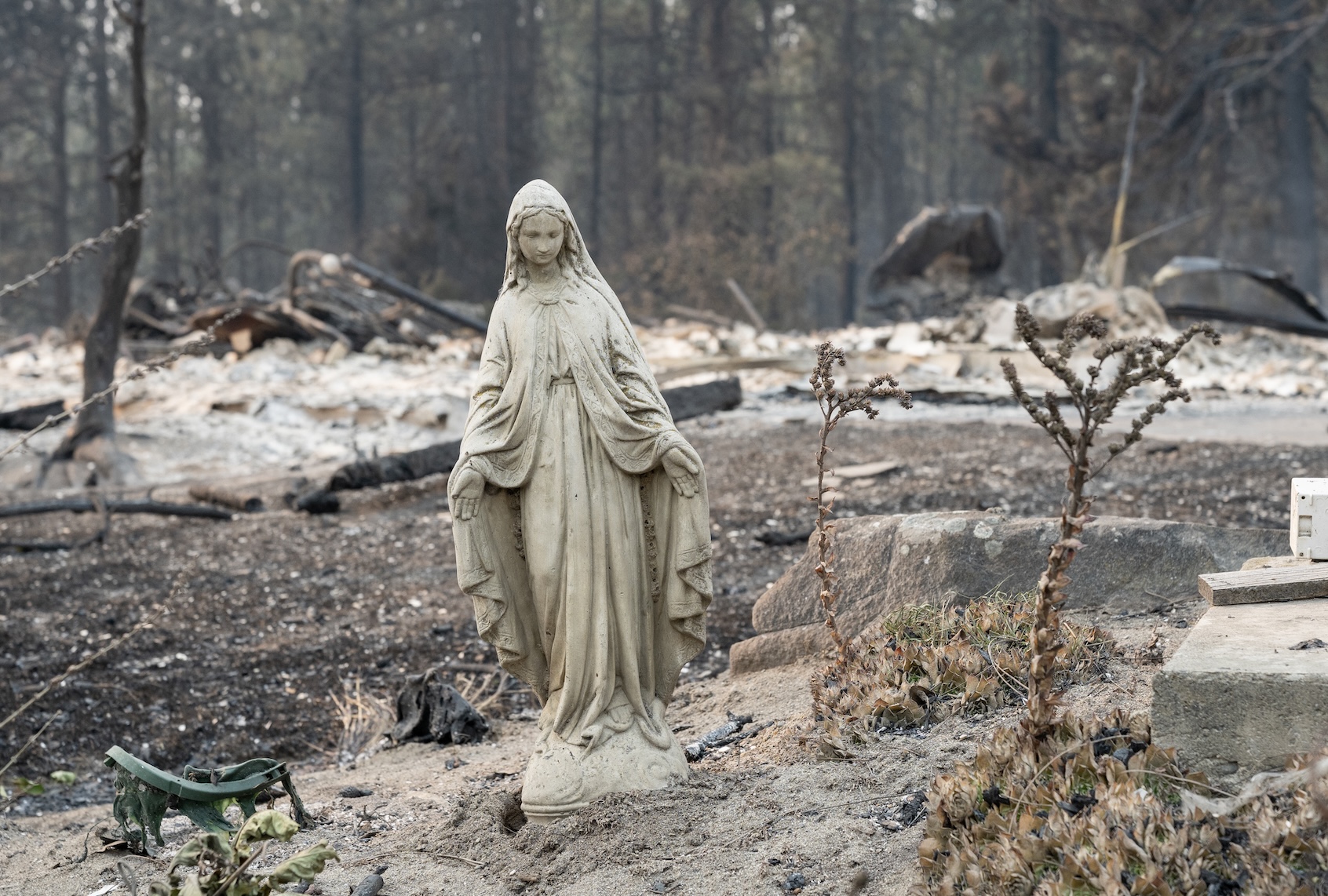
If you need any proof that climate change is not some far off problem for future generations — it’s our disastrous present — look no further than the unfolding wildfire crisis gripping the globe. In Spokane County, Washington alone, three major wildfires have devastated the area, prompting the evacuation of almost 65,000 people and destroying more than 700 homes. But there are at least 14 other fires raging throughout the state. In nearby Oregon, a record-shattering 2 million acres have burned, with 102 new fires reported across the nation on Aug. 2 alone, seven of which are large. Meanwhile, across the pond, Europeans are battling their own record-breaking wildfires in the U.K., France, Greece and elsewhere, where two crew members were killed in a midair collision.
High winds and hot, dry weather have fueled the blazes, but these conditions have been worsened by climate change. Fires are a natural phenomenon, of course, but what’s unnatural is their intensity and the level of heat. Every time we burn fossil fuels, it adds more chemicals to the atmosphere that trap more heat, creating a positive feedback loop that makes everything hotter and drier.