
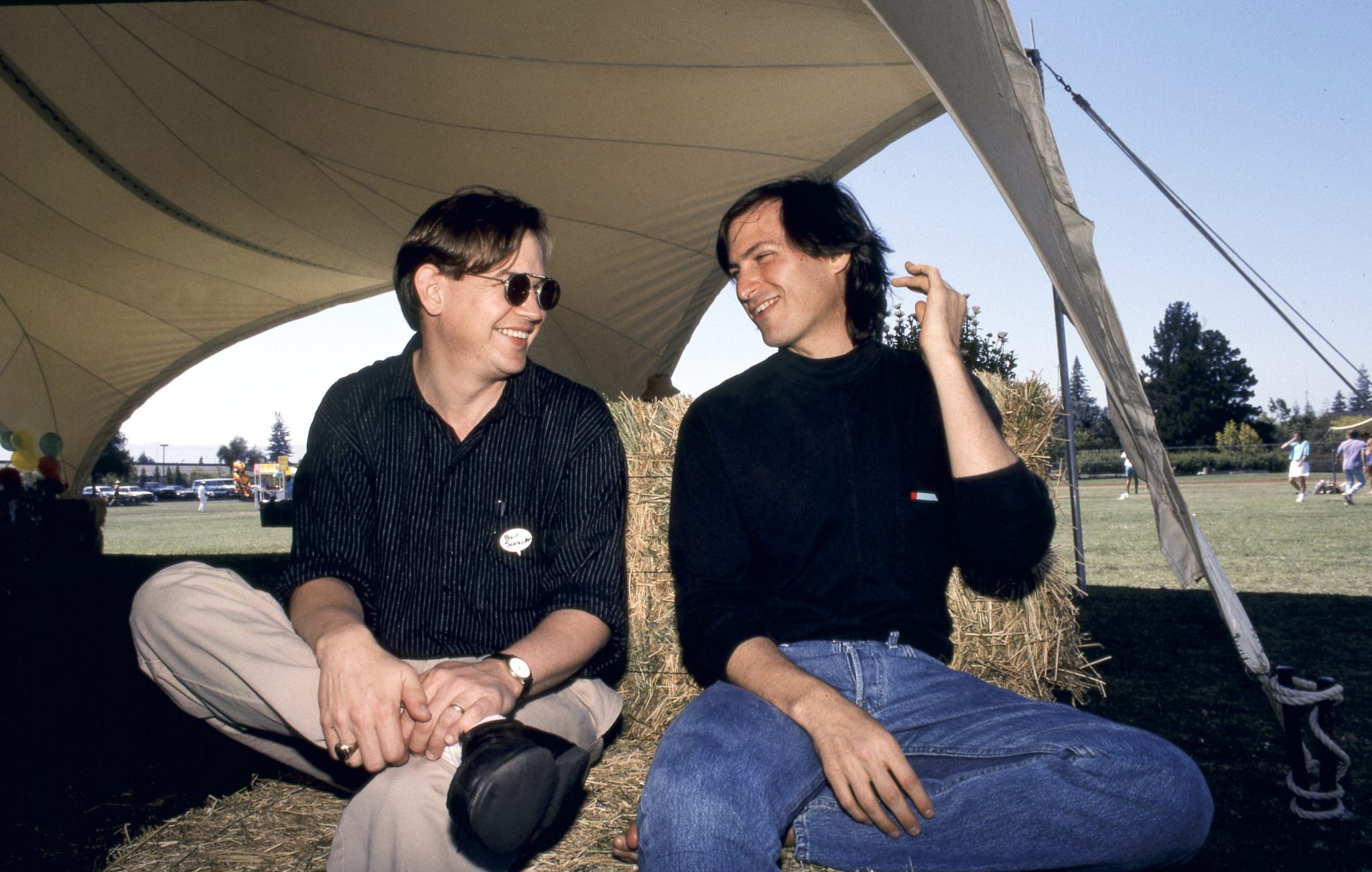
Most of us who wrote in depth about the brilliant career of Steve Jobs sooner or later came to realize that we were complicit in the making of a modern myth. You simply couldn’t avoid it. And while it is true that Jobs was as charismatic as Clooney and as manipulative as Machiavelli, the legend we helped him construct served many purposes beyond pumping up his own ego. He was an irresistible force who knew that in order to bring to market the amazing technological wonders that bubbled in his imagination, he also had to become the Svengali of the digital revolution that was to be the hallmark of his generation.
Nevertheless, Steve was merely mortal. And his storied life was one of dissonances and contradictions. He proudly flouted authority, yet he embodied extreme self-discipline. He wouldn’t suffer fools, but that wouldn’t keep him from turning on the charm to woo a “bozo” who had something he needed. He was the ultimate nano-manager, who also could limn the grand strokes of a big picture that others rarely could fully perceive without his help.













