When the designers Watcharavit Chanyakul and Siriwan Wattanajindawong walked around Yaowarat, they were fascinated to see how people adapted everyday materials to create functional objects in limited spaces.
For example, two broken plastic chairs, damaged in different spots, were stacked together to make one usable chair.
A plastic bag was used to replace the missing backrest of a chair, so that people could lean against it.
These creative ideas inspired Siriwan and Watcharavit to create their own designs and collaborate with their colleague Punyanuch Thaiphadungpanich to organise the exhibition "24/7 Objects Everyday Reimagining Bangkok Things".
The exhibition is divided into three sections. The first section presents photos of objects that have been creatively fixed. These objects were discovered while exploring Yaowarat, Sanam Luang, Tha Phra and other old town areas.
The second section features product designs inspired by their observations during fieldwork. The final zone, which was inspired by local sho huai mom-and-pop stores, displays designs available for purchase.
Siriwan and Watcharavit, who founded the Jhanyar studio, had been interested in everyday objects and developing designs that are both aesthetic and functional since their student days at the Department of Product Design, Faculty of Decorative Arts, Silpakorn University.
This exhibition, which is on display at MunMun Art Destination (MMAD), is the second exhibition by the pair.
Their first exhibition, "GaGeeNang", was displayed at Bangkok Design Week 2025. This project showcased colourful plastic chairs commonly found at food stalls which were developed and adapted by Watcharavit and Siriwan.
Siriwan revealed that they came up with the idea of the GaGeeNang stool when they were at Jek Pui, a curry rice shop with no tables. Customers sit on plastic stools and use an extra stool as their table.
"This behaviour arises because eateries have limited space and cannot accommodate many tables," explained Siriwan.
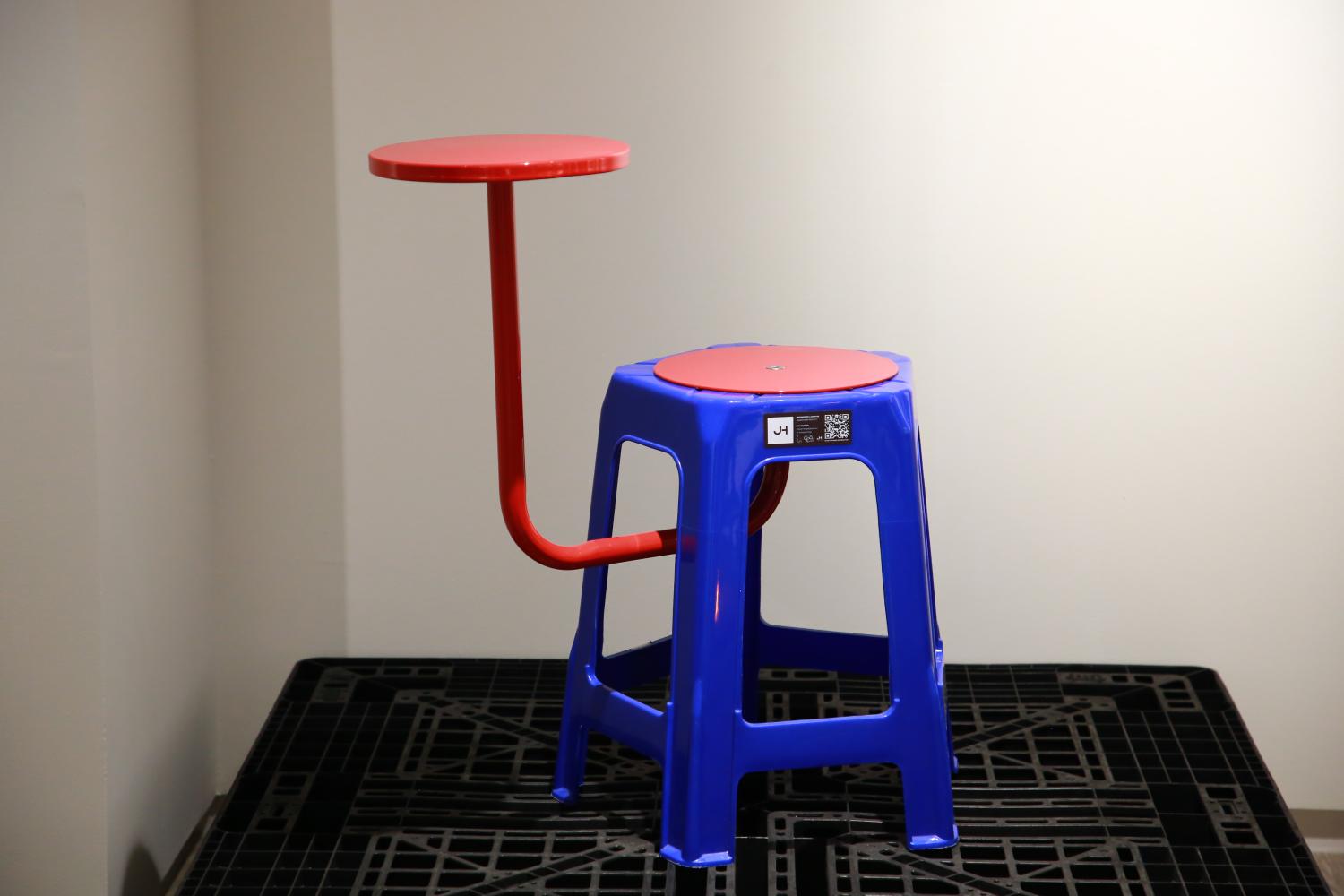
"This led us to consider how we could design seats that are more convenient and functional. Every plastic stool has a hole in the middle due to its production. We wondered if we could design a table which is connected from this hole. The result of this idea was GaGeeNang 01."
GaGeeNang 01 is a stool design that has an extended small round table which is connected to a hole in the middle of the stool. This saves space and is convenient. After trying the stools, customers were happy with the convenience, but in terms of storage, vendors could not stack them like the old stools.
Watcharavit and Siriwan then designed GaGeeNang 02 to solve the problem of storing.
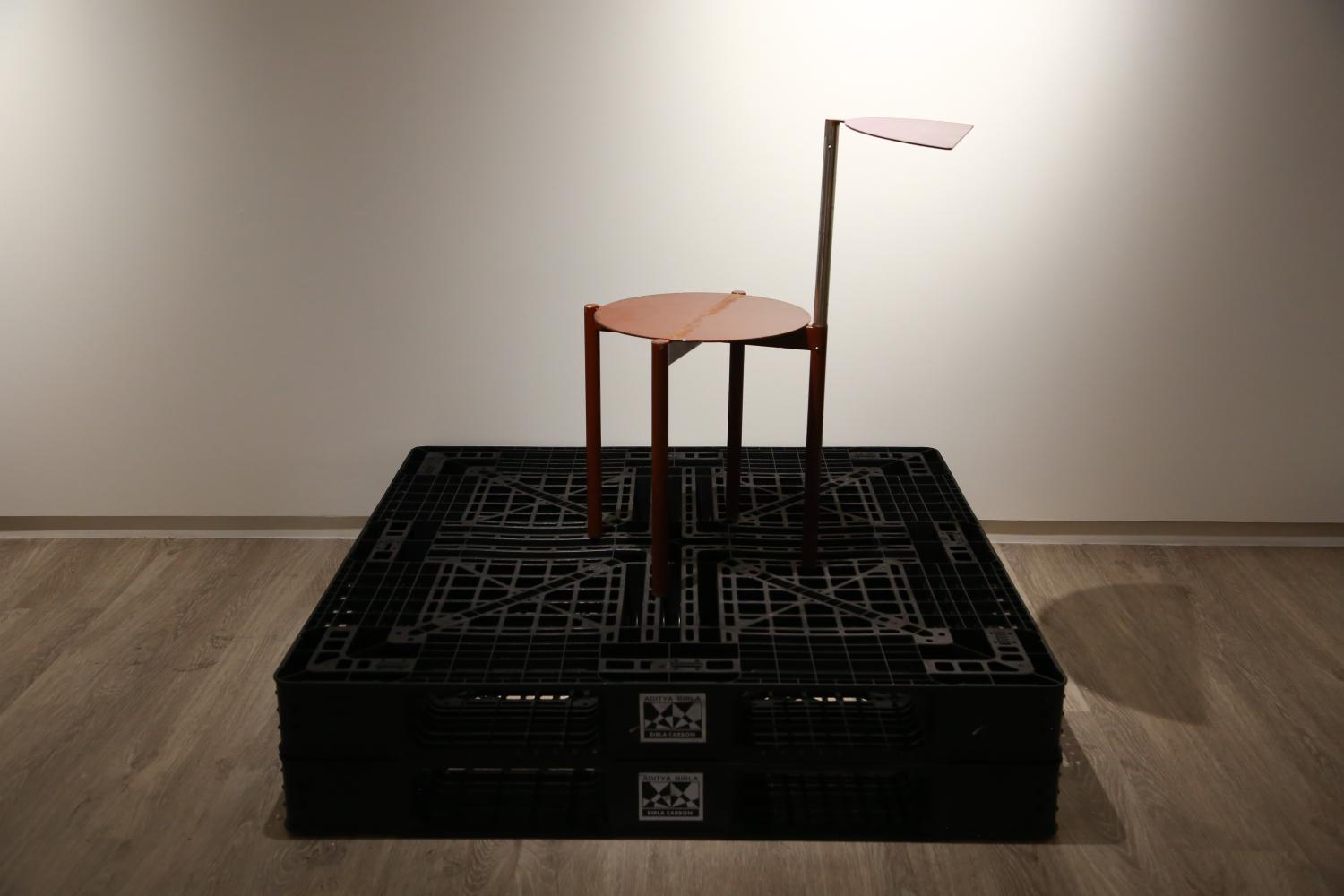
GaGeeNang 02 is made of steel featuring a slim seat. It also features a foldable, semicircular table. GaGeeNang 02 was tested in cafes around Song Wat rather than rice eateries. Unlike curry rice diners who stay about half-an-hour, cafe visitors spend less time. GaGeeNang 02's table is also suitable for placing drinks and snacks.
After designing GaGeeNang 02, Watcharavit and Siriwan returned to the cafe to borrow their product for this exhibition. While customers and shop owners were satisfied with GaGeeNang 02, the Jhanyar designers noticed a downside to their product. The material was not durable enough and had already started to rust.
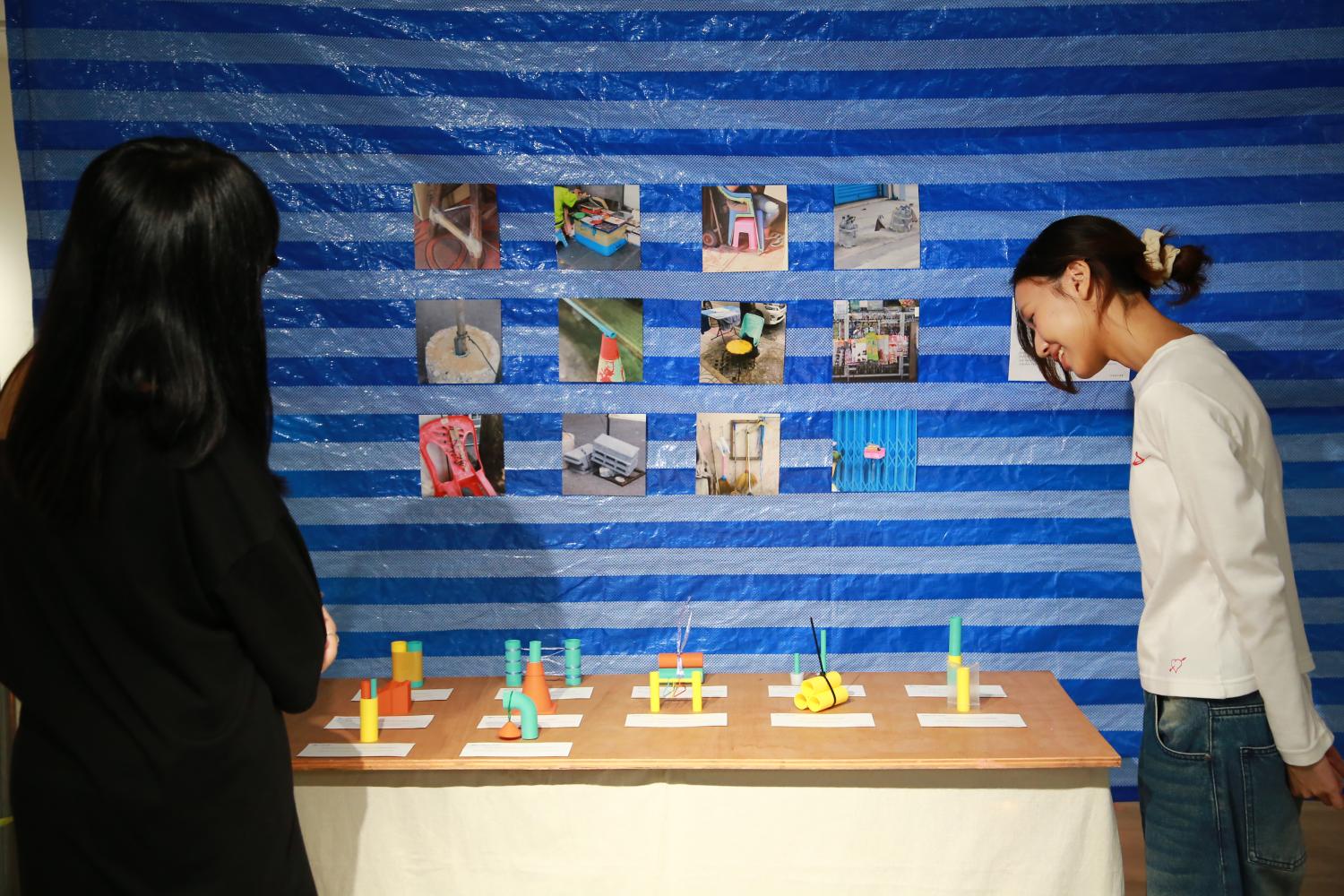
Both GaGeeNang 01 and GaGeeNang 02 are displayed as the first products in the second section. Next to their debut products, the designers display others which were inspired by the concept that Thais like things simple, are considerate and love freedom. The concept signifies that Thais have a knack for DIY solutions and they turn difficulties into simplicity.
"From our fieldwork, we discovered Thais often use tape for repairs. Even on walls with peeling paint, Thai people use matching-coloured tape to cover it up. Tape became an element that we used in the exhibition," explained Siriwan.
The L-shape stool, with its connected slotted angle bars creating a stool structure and with woven bungee cords for the seat, is a creative and durable design.
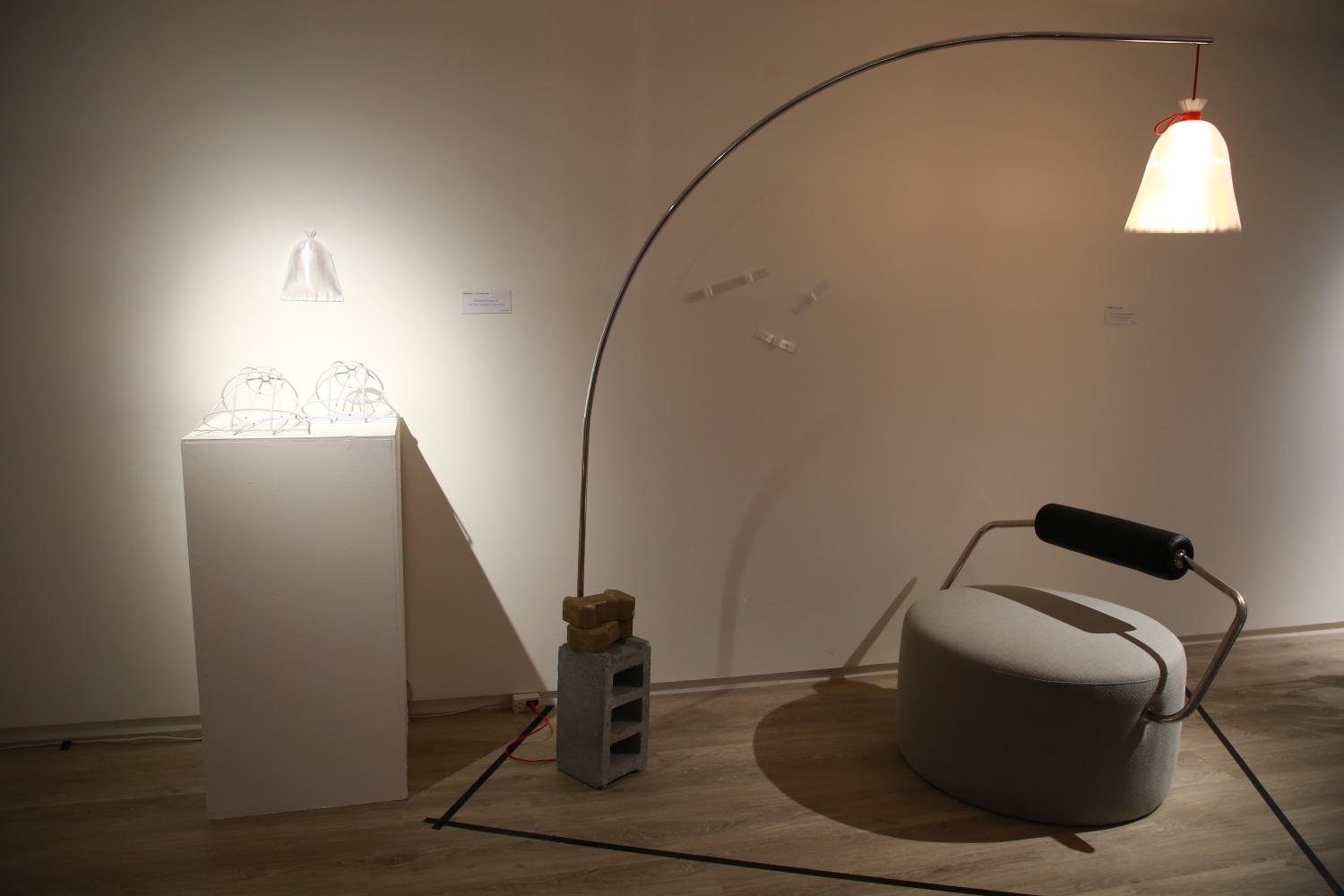
Hanging plastic bags filled with water to repel insects is a smart idea that relies on the principles of light refraction and reflection. This causes the insects' eyes to become blurry and they will fly away. The reflection of plastic bags triggered the Jhanyar designers to create Curry Bag Lamp.
Although the lamp takes the form of an ordinary plastic bag, the designers creatively transform it into an aesthetically pleasing design. The lamp was designed to complement a sofa, which was inspired by a cement mixing tub. However, unlike a real cement mixing tub, this sofa is remarkably soft and comfortable.
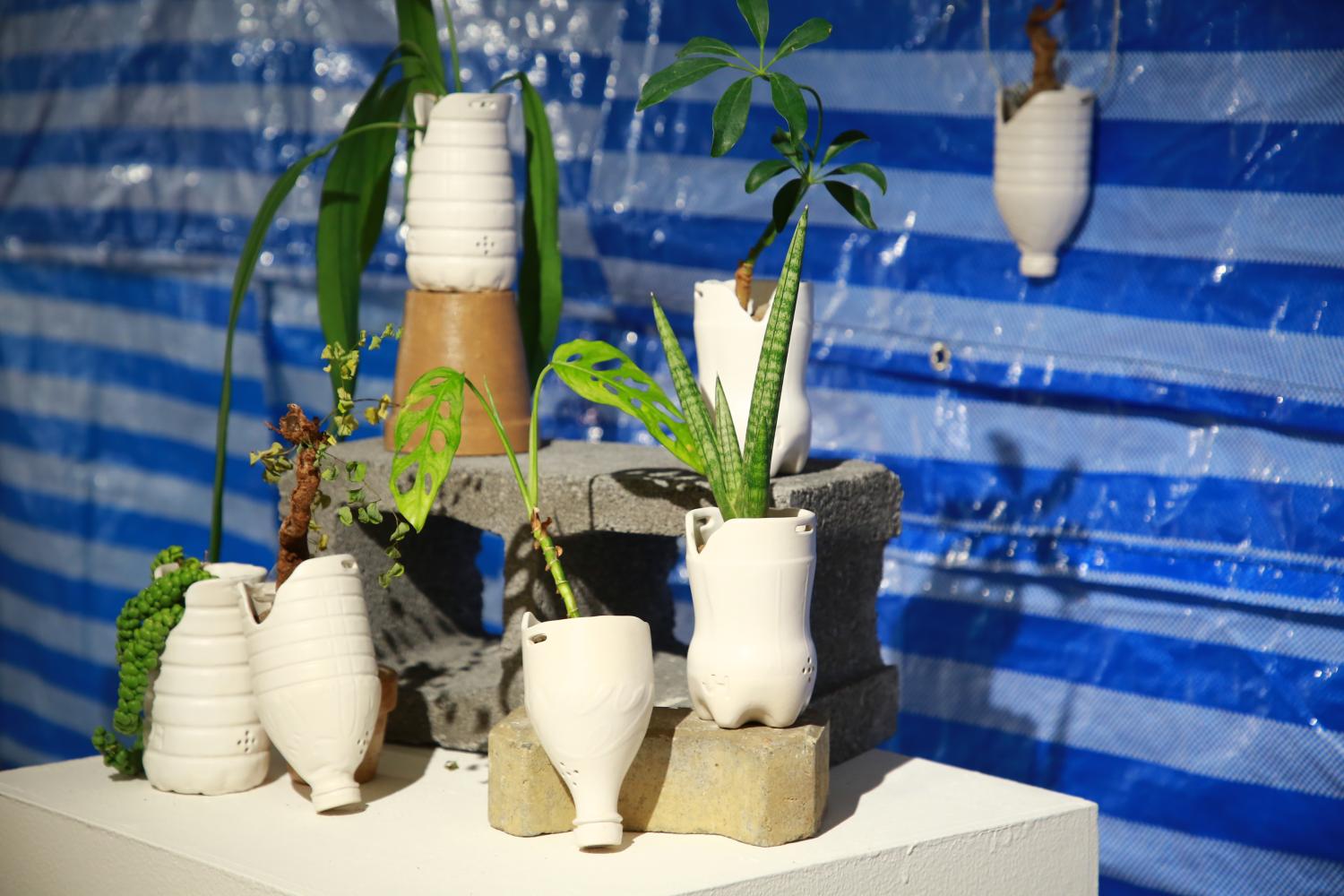
Many people repurpose discarded plastic bottles as pots for growing plants, but they soon deteriorate because the material is not durable. To solve this problem, the Jhanyar designers created ceramic pots crafted in the shape of discarded plastic bottles titled Plastic Bottle Plant Pot.
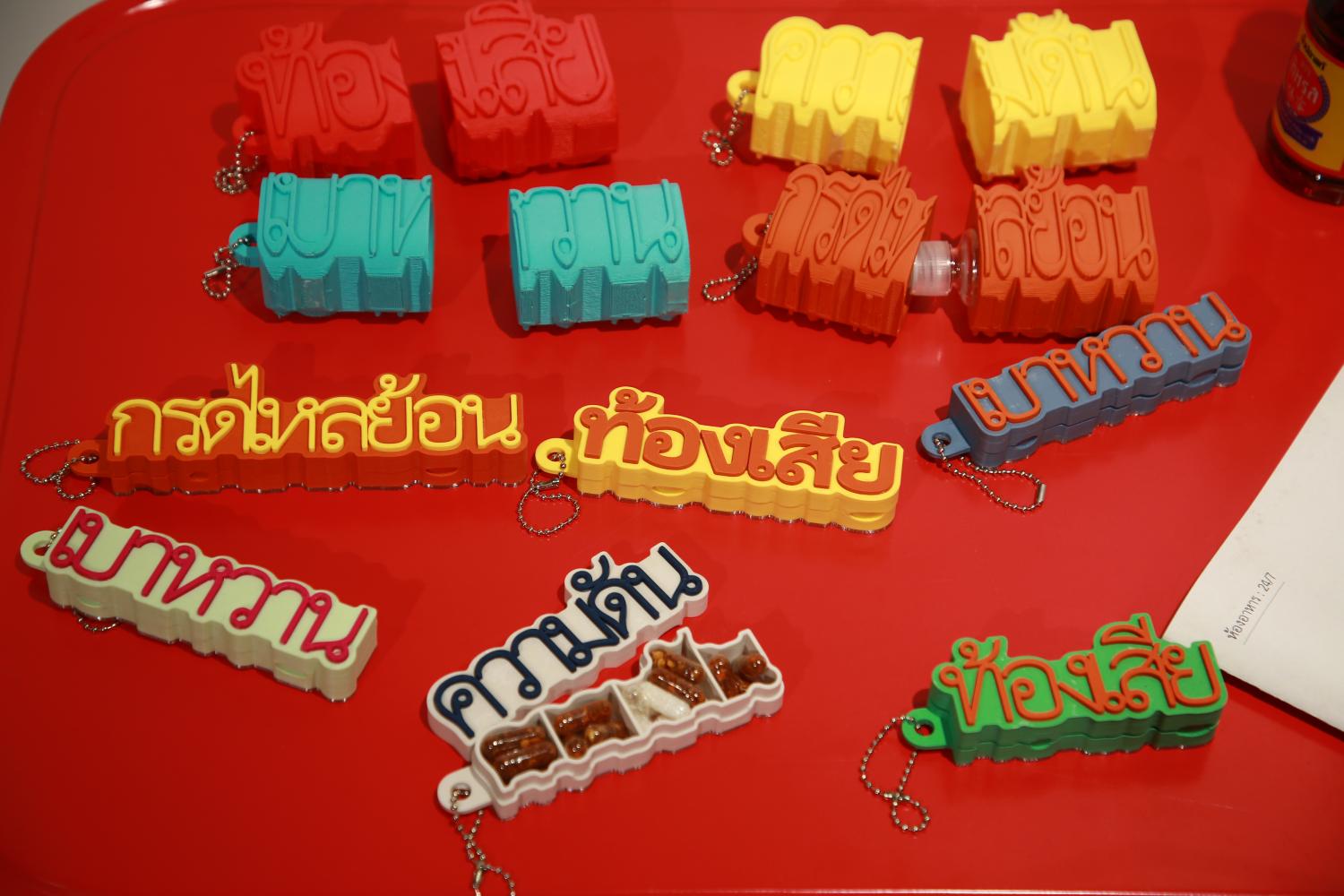
At the end of the section, From Thai Taste To Effect showcases keychains inscribed with various health conditions, such as diabetes, high blood pressure, diarrhoea and acid reflux. While the designers draw inspiration from the Thai community, they found that Thais have a habit of seasoning food with extra condiments. The keychains give warnings in an ominous way.
"Thais instinctively season their food before even tasting it. Thus, we designed this warning piece to illustrate the negative impacts of over-seasoning which leads to health issues," said Siriwan.
The final section is a showcase of design products, such as T-shirts, keychains, lamps and stickers. The displays were designed with the vibe of sho huai.
Watcharavit and Siriwan revealed that the challenges in creating the exhibition lay in designing the visitor experience. The designers had to figure out how to make visitors truly relate to what they are trying to communicate.
"The exhibition purpose is fulfilled if it can make viewers smile or talk. Bringing the vibe of Bangkok's streets and sidewalks, the exhibition features straw ropes and canvas. While these materials might seem out of place in other exhibitions, they fit in perfectly here," said Siriwan.
The Jhanyar designers hope that the exhibition helps visitors to recognise that design is everywhere.
"When visitors see that bungee cords can transform into a stool, they may recognise that design exists in their everyday surroundings," said Watcharavit.
"When we shared the design of GaGeeNang stools online, it received both positive and negative comments. We were glad that our product stimulated discussion. We also hope to see Thai designs evolve beyond traditional craft. Thai designs can showcase the unique behaviour of Thais and everyday materials related to them."
"24/7 Objects – Everyday Reimagining Bangkok Things" runs at MMAD Gallery 3, 2nd floor, Seacon Square Srinagarindra, until June 21. Admission is free. For more information, visit facebook.com/MunMunArtDestination.