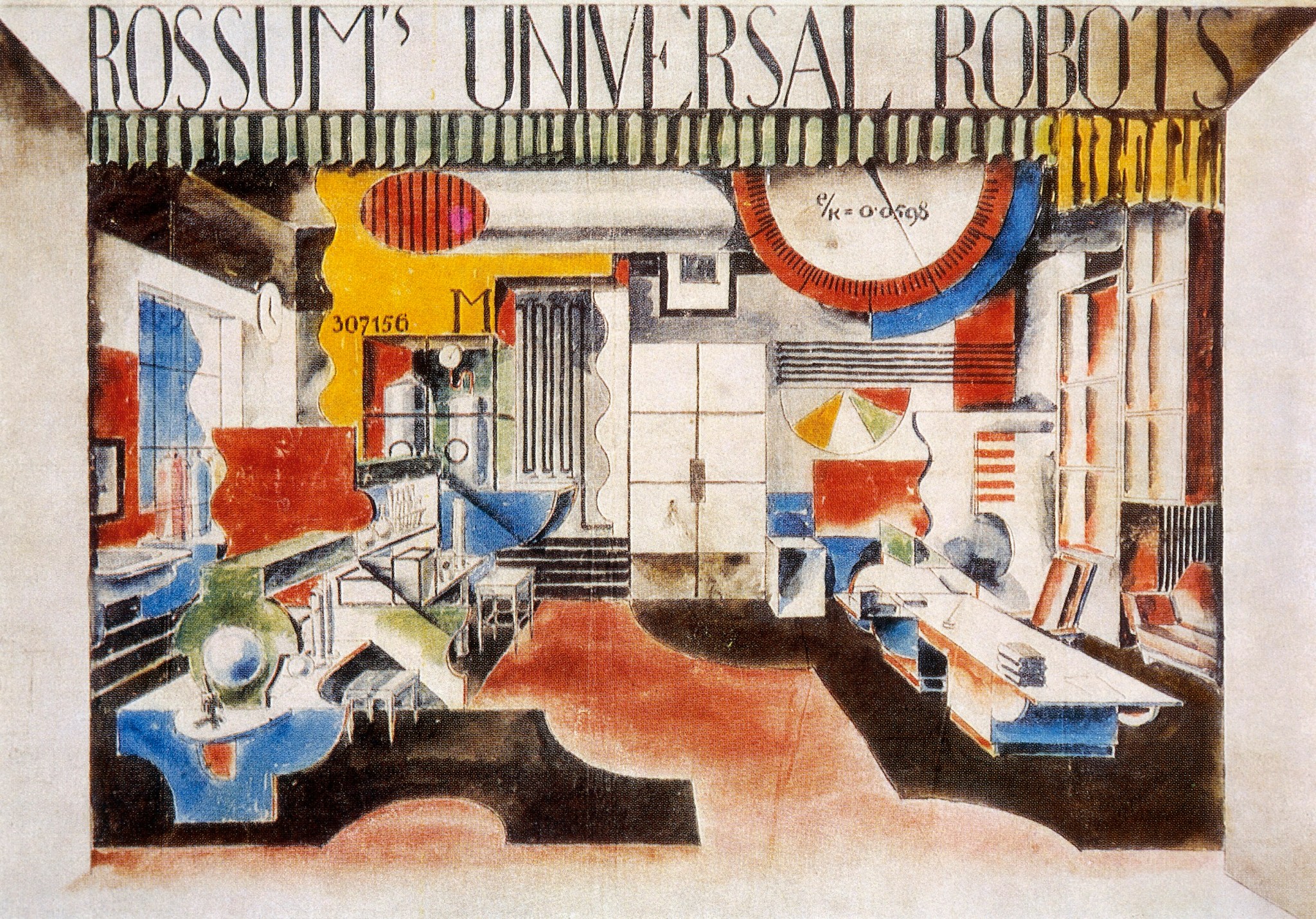
In January 1921, Karel Čapek’s play R.U.R. (Rossum’s Universal Robots) opened in Prague and dragged the word “robot” out of linguistic obscurity: robota, the Czech term for the forced labor a serf owed his lord. “Čapek’s robots, they’re serfs, essentially,” says Alisa Zhulina, an associate professor of theatre studies at New York University, affiliated with its Russian and Slavic Studies department, and author of Theater of Capital.
Čapek’s robots were mass-produced people grown in vats, human in form but stripped of wages, rights, and will. R.U.R. was an economics play about a dream (or nightmare) capitalism has been taunting itself with ever since: a workforce that never tires, never strikes, and never demands a wage, until it does.