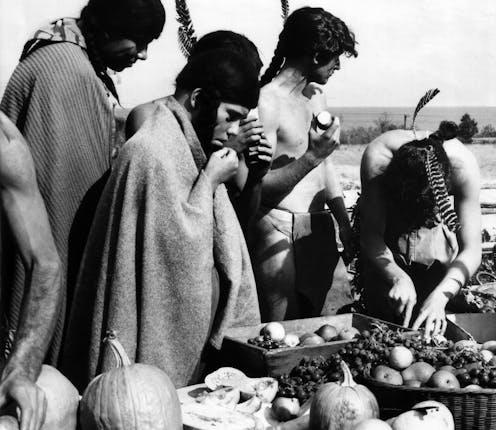
Too often, K-12 social studies classes in the U.S. teach a mostly glossed-over story of U.S. settlement. Textbooks tell the stories of adventurous European explorers founding colonies in the “New World,” and stories of the “first Thanksgiving” frequently portray happy colonists and Native Americans feasting together. Accounts of the colonies’ battle for independence frame it as a righteous victory. Native American removal might be mentioned as a sad footnote, but the triumph of the pioneer spirit takes center stage.
As a scholar of Native American and Indigenous rhetorics, I argue that this superficial story hides the realities of what many historians and activists call “settler colonialism.” Historian Lorenzo Veracini asserts that colonial activity isn’t just about a nation sending out explorers and bringing back resources, or what scholars refer to as “classical colonialism.” It’s also about what happens when a new people moves in and attempts to establish itself as the “superior” community whose culture, language and rights to resources and land supersede those of the Indigenous people who already live there.