
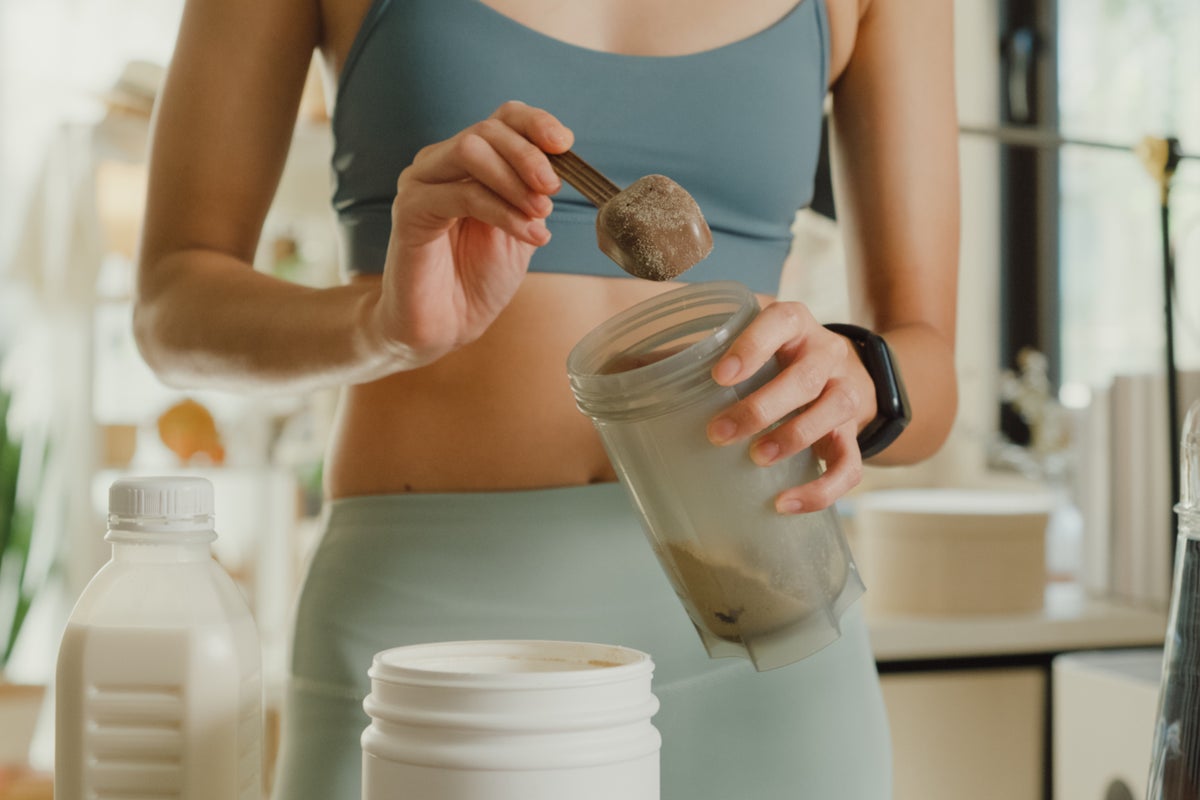
If you’re a gleaming gym influencer or muscly tech bro, nothing is more essential than Huel, or any one of the grainy, tongue-curling meal replacement shakes that have bio-hacked their way into cultural ubiquity of late. The post-pandemic wellness boom, born from a desire to avoid getting sick, brought with it a huge wave of pills, potions and powders promising to cure ailments, boost health, and improve performance. “Protein” has become a buzzword for anything fitness-related, and drinks like Huel have found their way onto every shelf, promising quick hits of protein and nutrition to, well, fuel you through your day.
But the tide is beginning to turn on these drinks, thanks to a new awareness around the detrimental impact ultra-processed food is having on our bodies, and concerns over how these shakes are being used. Eating disorder specialist and MBACP-accredited psychotherapist Ruth Micallef tells me that many of these drinks – that are heavily advertised on social media as “nutritionally complete” and “protein-rich” – are helping to fuel eating disorders in a “socially acceptable manner”. (Huel did not respond to multiple requests for comment.) Most meal replacement brands – Huel included – don’t promote weight loss as a benefit, primarily focusing on protein content, which appeals to those trying to build muscle. But it’s undeniable that a significant portion of people use them for weight management. I should know. For a brief period last year, I was one of them.













