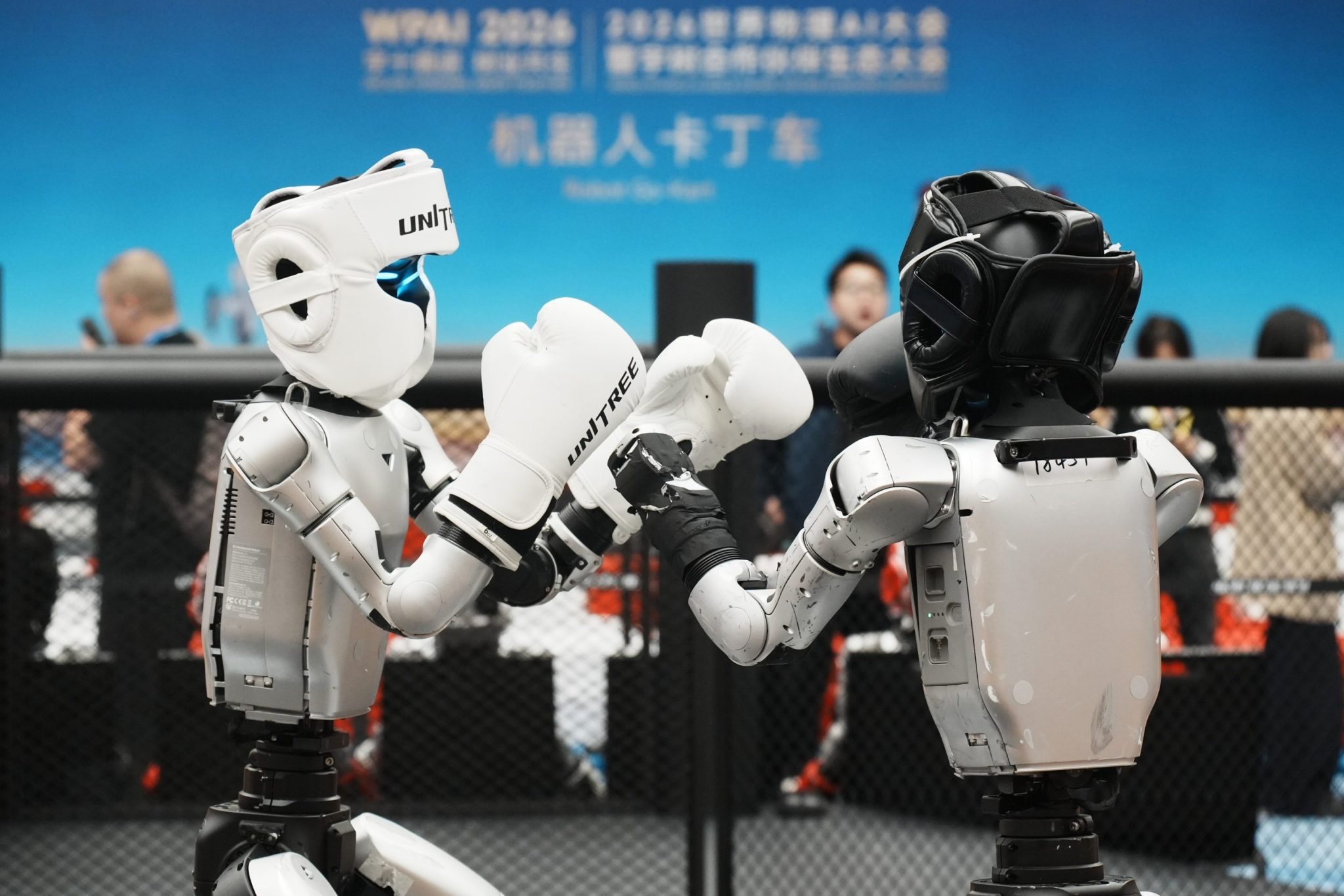
In August, at Beijing’s World Humanoid Robot Games, a robot called Tiangong Ultra ran 100 meters in 8.64 seconds, almost a second faster than Usain Bolt’s world record. A year earlier, at the Games’ first edition, the winning time had been 21.5 seconds. Yet this year’s champion could not stop: it crashed into the padded barrier beyond the finish line, along with several of its rivals. That is physical AI in a single race: breathtaking progress on some skills, persistent weakness on others. Knowing where that boundary lies, and how fast it is moving, is now a strategic question for every executive.
This fall, we spent a week in Shenzhen and Beijing visiting robotics companies, from start-ups founded by former Huawei and DJI engineers to firms that already ship robots by the tens of thousands. The founders we met cared less about sprint records than about one question: where can a robot be trusted to work today, and where can it not? Their answers convinced us of two things. Physical AI is the real AI revolution. And it is arriving far faster than companies or governments are preparing for.