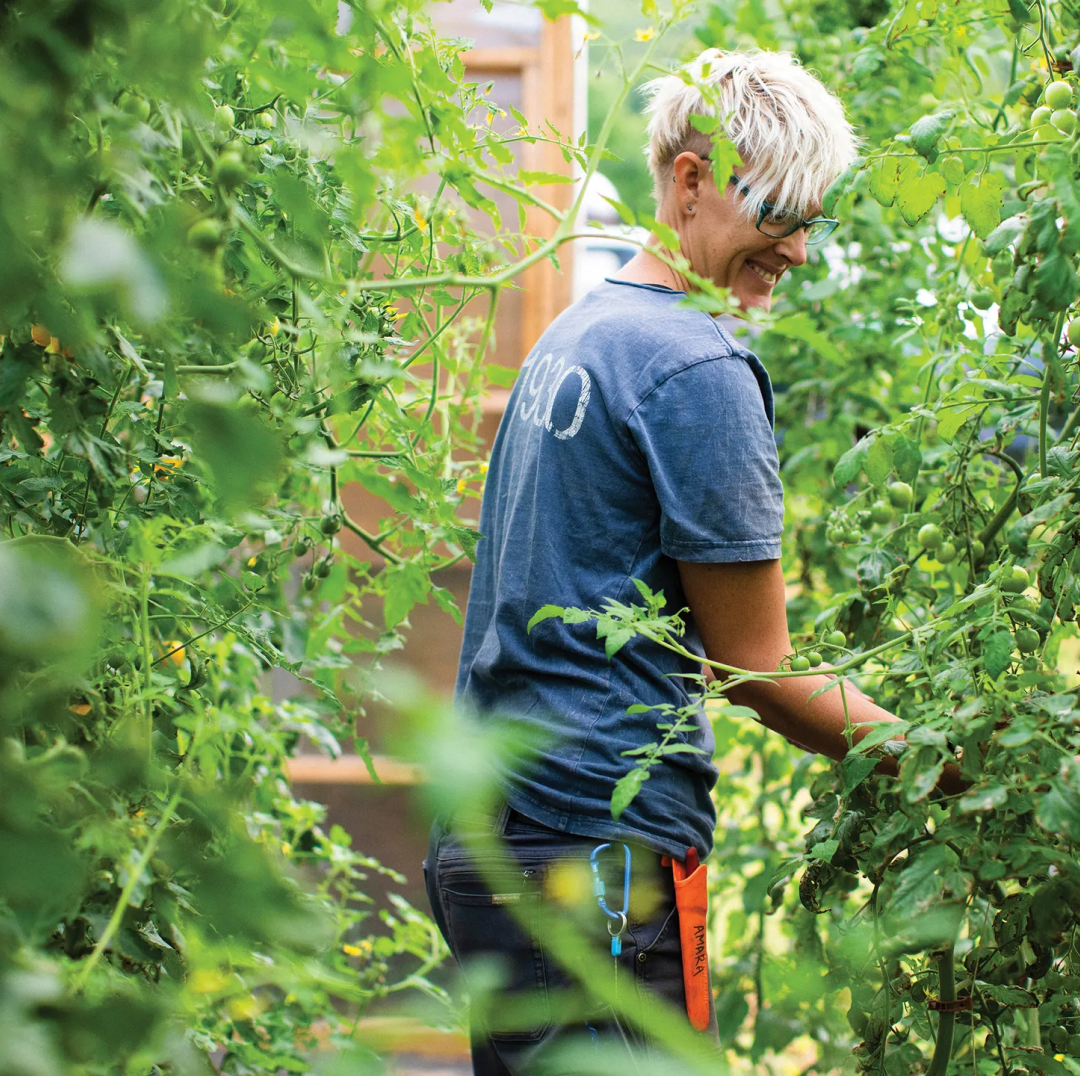
Down a long, flat road in the town of Millerton, New York, about 90 miles from New York City, sits a 12-acre plot of land, the home of Rock Steady Farm. Depending on the season, visitors will find it filled with rows and rows of candy-colored produce: Ripe, tie-dyed tomatoes hanging from vines. Sunshine yellow patty-pan squash protruding from squat leafy plants. Bushy greenery hinting at what may lie beneath the soil: Onions, carrots, parsnips, maybe beets.
This might describe any of the 600-plus farms in Dutchess County, which has long been an agricultural hub in the Northeast—or any farm, anywhere. But Rock Steady is unlike most of its contemporaries in the country. While 96 percent of farms in the U.S. are family-owned, passed down from generation to generation, Rock Steady takes its origins not from family-forged relationships or land ownership, but from an ethos. The queer-owned and operated cooperative vegetable farm describes itself as being "rooted in social justice, food access, and farmer training."