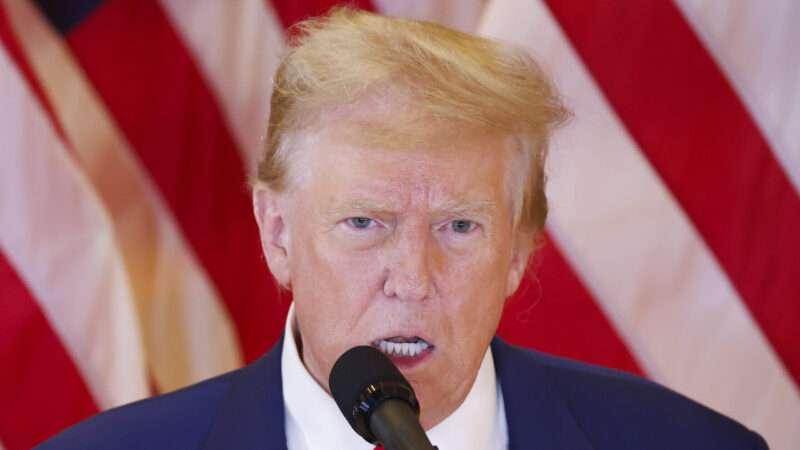
Last January, Manhattan District Attorney Alvin Bragg summed up his case against Donald Trump this way: "We allege falsification of business records to the end of keeping information away from the electorate. It's an election interference case."
That gloss made no sense, because the records at the center of the case—11 invoices, 11 checks, and 12 ledger entries that allegedly were aimed at disguising a hush-money reimbursement as payment for legal services—were produced after the 2016 presidential election. At that point, Michael Cohen, Trump's lawyer, had already paid porn star Stormy Daniels $130,000 to keep her from talking about her alleged 2006 sexual encounter with Trump, and Trump had already been elected. The prosecution's case against Trump, which a jury found persuasive enough to convict him on all 34 counts yesterday, was peppered with temporal puzzles like this one.