
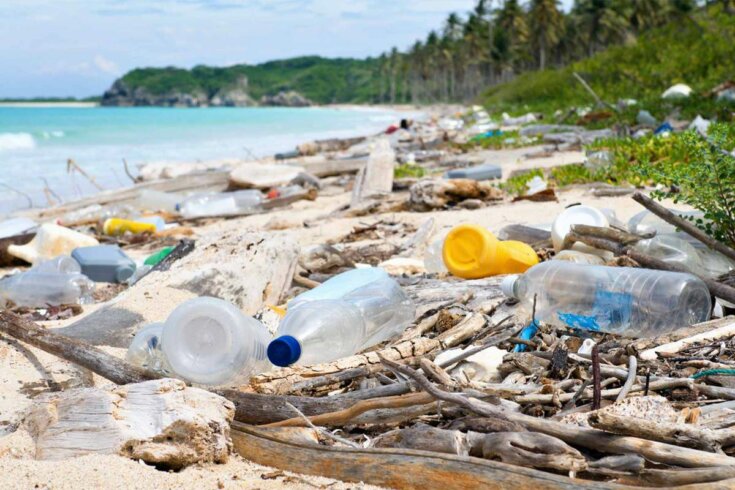
New York. A person can spend weeks in this port city without ever seeing the ocean. Skyscrapers. Central Park, with its sprawling lawns, trees, paths, vendors, a boathouse and restaurant: an urban refuge. Street performers at its edges. And people everywhere—in the park, on the streets. Tourists gawking, locals with places to be, a more urgent gait. At lunchtime, the restaurants are packed and efficient, set up for take-out and quick turnover. Fast-food joints: five minutes of eating, then dump your overflowing tray of coated paper, waxed or plastic cups, and Styrofoam shells into the garbage receptacle. More upscale spots: artisanal breads loaded with all the on-trend healthy ingredients, kombucha or green tea or decaf latte, double sugar, hold the fat. Still, the single-use cup, the single-use clamshell, the single-use cutlery, the single-use straw. Maybe eco-friendly-looking brown paper napkins. All tossed in the garbage or, covered with food scraps, into recycle bins. Which, then, magically disappear. Downtown Manhattan—you could eat off the streets. Where does all the garbage go?
Sure, there are dumpsters in back alleys, full to overflowing with garbage. Out of sight, out of mind. With an efficient waste management system, the city’s garbage literally disappears from view. It’s understandable that most people don’t concern themselves with it or wonder about where the garbage or their dirty recyclable materials are taken. By dropping their waste into the appropriate bin, they’ve done their duty. On to the next board meeting.