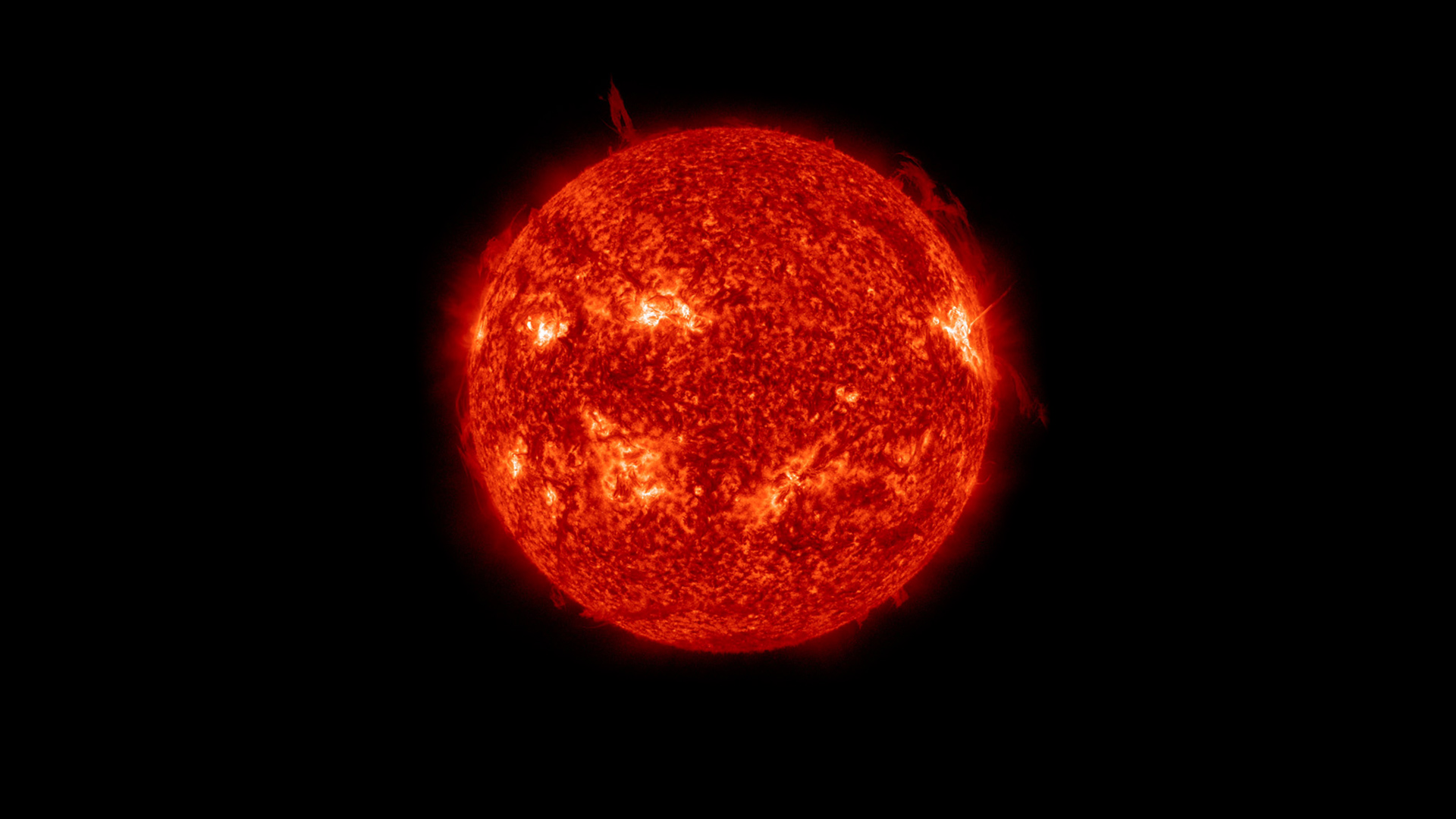
Astronomers trying to measure the sun's age by analyzing vibrations rippling within the sun have realized something troubling. It seems that the solar cycle of magnetic activity is meddling with their efforts. Of course, we can verify the sun's true age through independent means — and we therefore know it's about 4.6 billion years old — but this issue with vibrational measurements of stellar age threatens to thwart attempts to measure the fundamental characteristics of other stars.
We know the sun's age because, for instance, scientists have managed to measure the radioactive decay of atoms in our solar system that formed alongside the planets and the sun. Radioactive decay refers to when the nucleus of an atom loses energy via radiation and decays into a more stable element. The rate of decay of a quantity of radioactive material is described as its half-life, which is the time taken for half of that quantity to decay, so we can backtrack and work out how old it is based on how much has decayed over time. Thus, by tracking the timeline of radioactive decay for atoms within our solar system, we can deduce the age of our solar system. In addition, scientists' detailed models of stellar evolution are key in determining the sun's age.