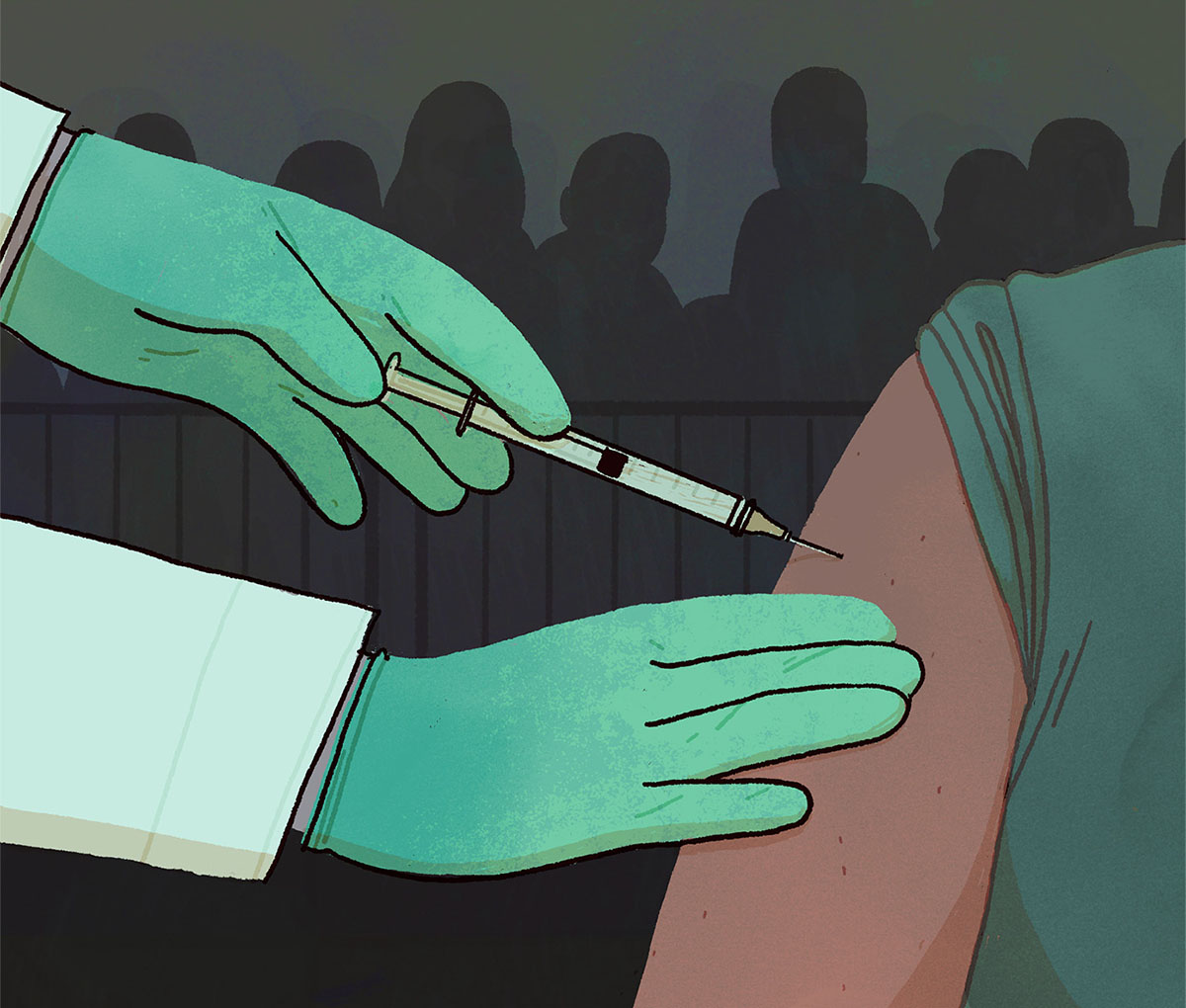
On May 5, the World Health Organization (WHO) announced it no longer considers COVID-19 a global health emergency. That doesn’t mean the pandemic is over. With the virus continuing to spread and new variants breaking out, it’s widely accepted that the disease is probably here to stay. Among other public health measures, vaccines are key to allowing us to potentially live with it as an endemic disease. But evenly distributing them has proven trickier than perhaps it should be.
As of February, about 83 percent of people in upper-middle-income countries have received at least one dose of a COVID-19 vaccine, compared with a little over a quarter of the population in low-income countries—partially because pharmaceutical companies, including Pfizer and Moderna, sold the majority of their vaccines to rich countries earlier in the pandemic. The consequences have been devastating: according to a March 2022 Oxfam report, for every life lost due to COVID-19 in a rich country, another four people died in poorer nations.