
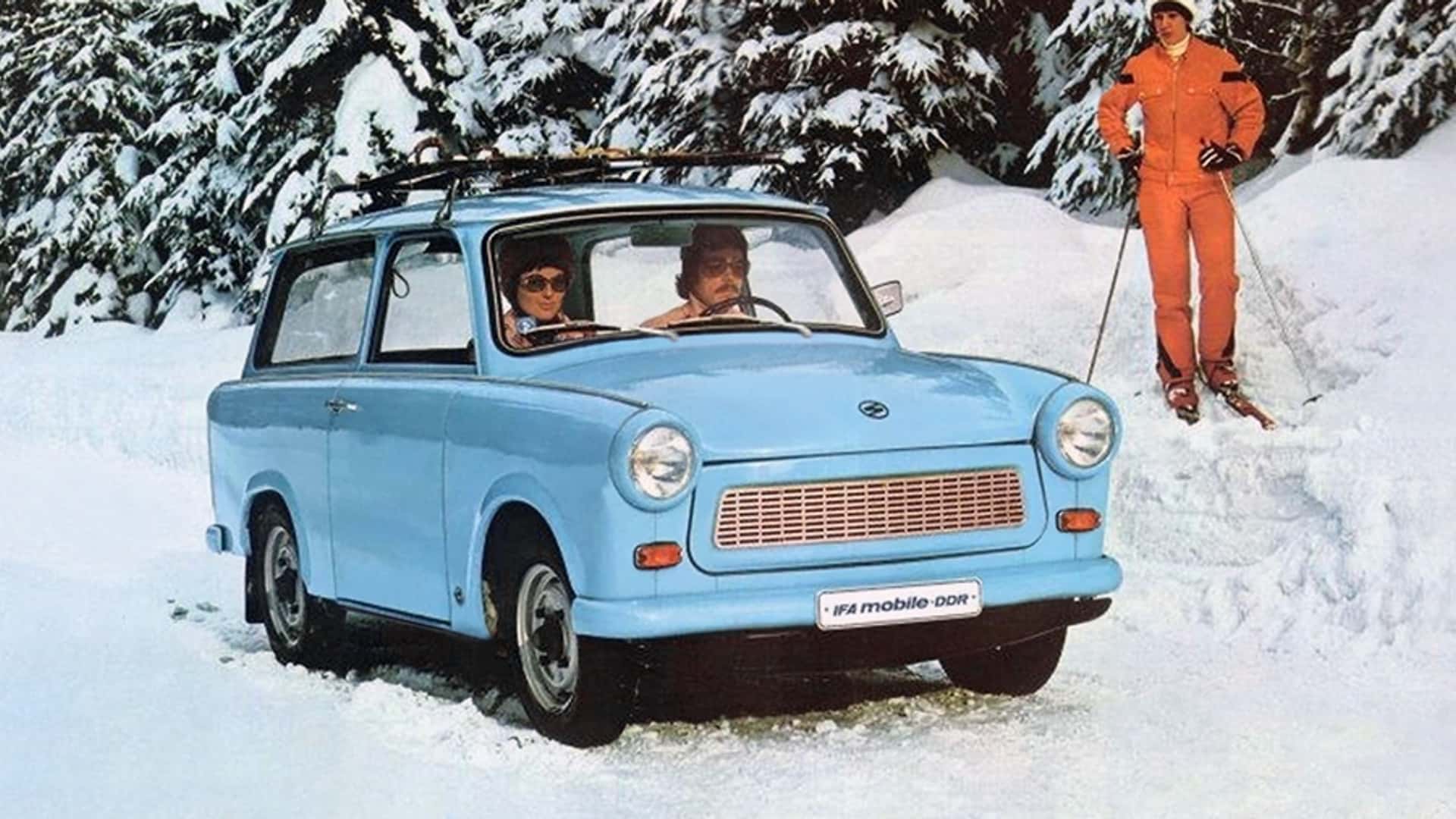
The fall of the Berlin Wall revealed plenty of things to the outside world, but few were as memorable as the cars East Germans drove through the border crossings. Among them was the Trabant 601, a tiny, noisy machine that looked like it had been left behind by the automotive industry for decades. It was slow, smoky, basic, and built with a plastic-like body. And yet, millions of people bought one.
The Trabant wasn't just a bad car. It was a product of an economic system that struggled to keep its automotive industry competitive with the West. Built in East Germany from 1964 to 1990, the 601 remained largely unchanged for more than a quarter-century. Its story is a fascinating look at what happens when an automaker has little incentive—or ability—to keep up with the rest of the world.