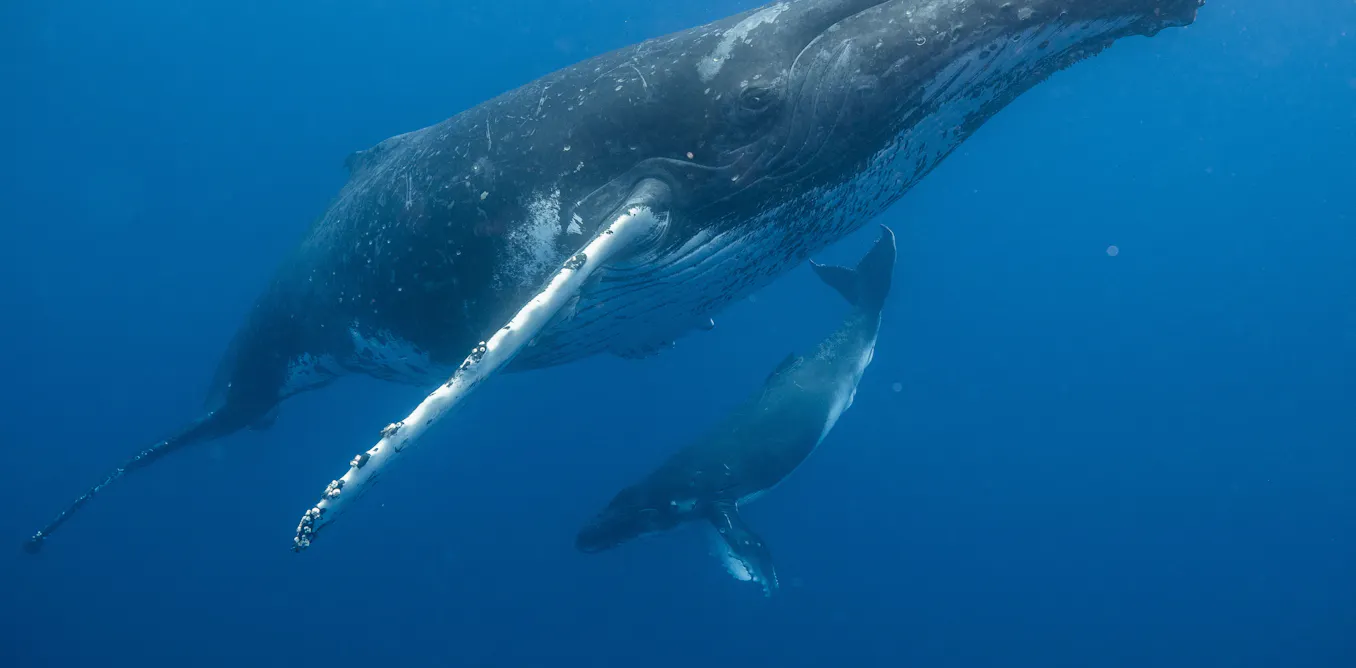
After centuries of whaling, humpback whales of the southern hemisphere were close to extinction. As few as 5,000 animals were left in the oceans. But after efforts to end whaling culminated in a 1985 moratorium, the whales began one of the biggest comebacks in conservation. Around 50,000 humpback whales now migrate along the eastern Australian coastline.
For decades, scientists associated with the Humpback Whale Sentinel Programme have monitored southern hemisphere humpback whales during the winter as they migrate from Antarctica to their tropical breeding grounds. This programme uses humpback whales as a sentinel species to track broader changes in the Antarctic sea-ice ecosystem. Humpback whales rely heavily on krill, and krill in turn rely on sea ice. If there’s a change in whale behaviour, health or reproduction, it signals a change in the supporting ecosystem.