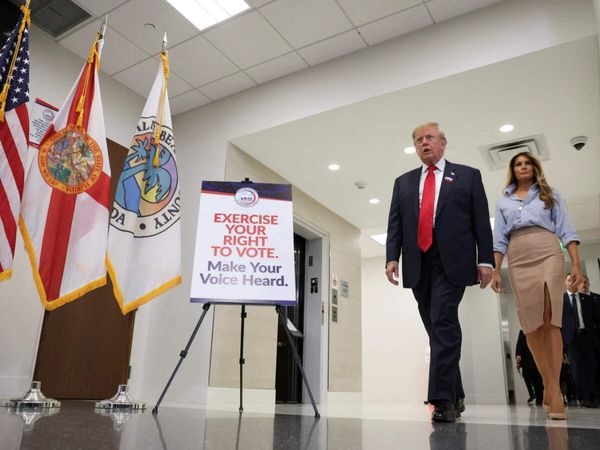
The prospective return of Donald Trump to office as president and commander in chief may — and in fact should — prompt a fundamental rethinking of civil-military relations in this country. Rather than a call to action, I offer here an appeal for preventive reflection by the military establishment on a matter of utmost domestic and international, strategic and ethical consequence.
Think of civil-military relations as a tacit but binding social contract of mutual rights, obligations and expectations among the three parties to this ideally harmonious but inevitably sometimes discordant relationship: the uniformed military, the military’s civilian overseers in Congress and the executive branch, and the general public. In the ideal version of this tripartite relationship, all parties have recognized institutional roles they are expected to fulfill for the common good. But if and when any of the parties fails to perform their roles correctly, the contract is broken and democracy is jeopardized, at least in some measure.