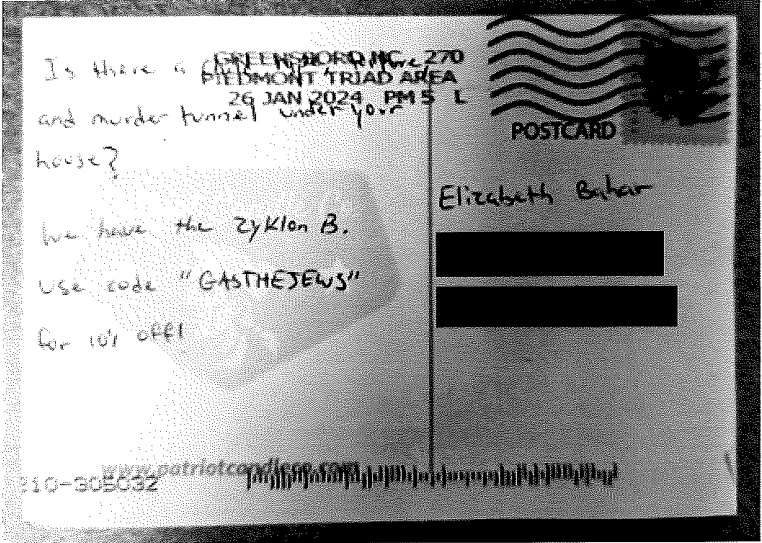
U.S. v. Ramos, decided Sept. 27, 2024 by Judge Marc Treadwell (M.D. Ga.), allowed the threats prosecution against the defendant to go forward:
"To obtain a conviction under 18 U.S.C. § 876(c), the government must prove beyond a reasonable doubt that the defendant (1) knowingly sent a message through the mail, (2) knew that the mailing contained a 'true threat,' and (3) intended (or at least knew) that the statement would be viewed as a threat."
"True threats" are not protected by the First Amendment of the United States Constitution. True threats are "statements where the speaker means to communicate a serious expression of an intent to commit an act of unlawful violence." A prohibition on true threats, such as § 876(c), "protects individuals from the fear of violence and from the disruption that fear engenders." Courts have consistently held that "whether a communication is a threat is an issue of fact to be left to the jury." However, "[i]f there is no question that a defendant's speech is protected by the First Amendment, the court may dismiss the charge as a matter of law." …
The indictment alleges that Ramos made the decision to mail a threatening, handwritten postcard to the home address of a Rabbi who had been speaking publicly against antisemitism following a neo-Nazi demonstration at her synagogue.